Thyme Harvest & Preserve
Harvest & Preserve Thyme
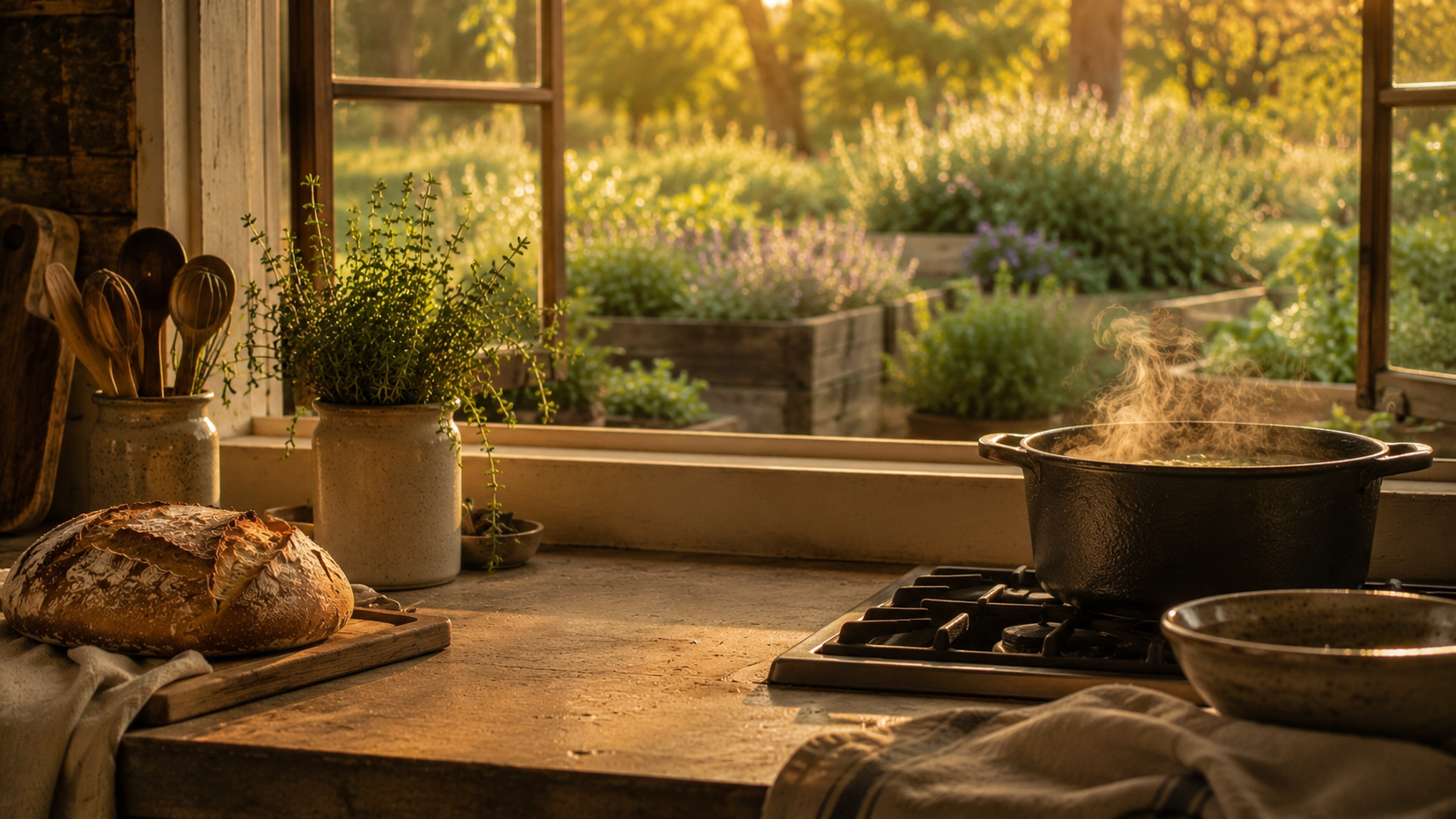
Thyme has never been the loudest herb in our garden. It does not take over beds or demand attention. Instead, it quietly finds its way into the meals that make a house feel like home — soup simmering on the stove, bread cooling on the counter, roast chicken shared around the table. These ordinary moments are why we preserve thyme. Because comfort deserves a place in every season.
Explore Thyme
From the garden to the pantry, the glass, and the meals we gather around.
This page is one part of the Thyme story. Start with the guide, make the syrup, or browse the recipes that bring thyme back into the kitchen and around the table.
Discover how we grow, harvest, and enjoy one of our favorite herbs.
Explore the guide →Learn when to harvest thyme, how to dry it, freeze it, and bring its aroma into the cooler months.
Save the harvest →Learn how we capture fresh thyme flavor for cocktails, mocktails, lemonades, and seasonal drinks.
Make the syrup →Explore seasonal cocktails, mocktails, and recipes inspired by what we grow.
Browse recipes →Knowing when to cut
Harvest thyme when the stems are fragrant, tender, and ready to follow you back inside.
Thyme can be harvested in small amounts through much of the growing season. The best stems are the soft green tips — not the older woody growth near the base. Cut in the morning after the dew has dried, trim gently, and leave enough growth behind so the plant stays strong.
By late summer, our thyme plants have given us more than we can use fresh. Drying a few bundles is not about stocking the pantry for the sake of it. It is about preserving familiarity. We know cooler evenings are coming. Soup season will return. Bread will find its way into the oven again. Family dinners will gather everyone back around the table. And when that first pinch of dried thyme hits a warm pan, summer somehow comes back with it.
Fresh thyme carries the softest aroma and belongs in meals, syrups, garnishes, and anything headed straight to the table.
Start fresh →Small bundles dry easily and keep thyme ready for soups, roasted vegetables, bread, chicken, and winter meals.
Dry bundles →Whole sprigs and syrup cubes make it easy to bring garden flavor into soup pots, teas, lemonades, cocktails, and mocktails.
Freeze thyme →Use what you saved in the cozy meals and ordinary evenings that make a house feel cared for.
Use it well →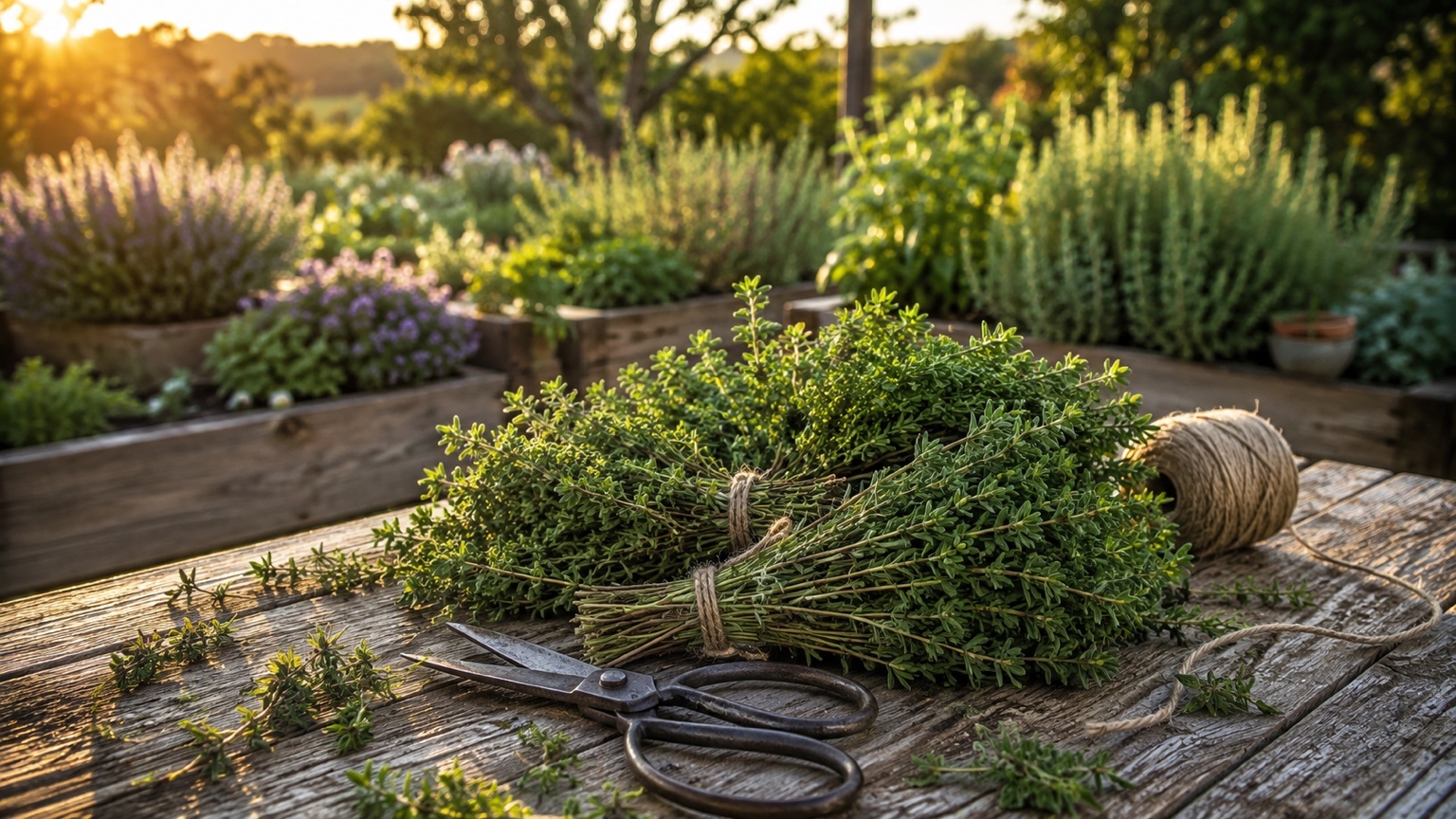
Fresh from the garden
Use the first handful while the scent still feels alive.
Fresh thyme has a softness that dried thyme cannot fully replace. It belongs in soup as it starts to simmer, tucked under chicken skin before roasting, scattered over potatoes, folded into compound butter, or pressed gently into bread dough before it goes into the oven.
It also works beautifully in the glass. A few fresh sprigs can steep into syrup, brighten lemonade, soften tea, or add a quiet herbal note to gin, bourbon, and sparkling mocktails. Fresh thyme does not need to announce itself. It simply makes everything around it feel warmer, more settled, and more like something worth sharing.
Drying thyme
The simplest method preserves the flavor we reach for all winter.
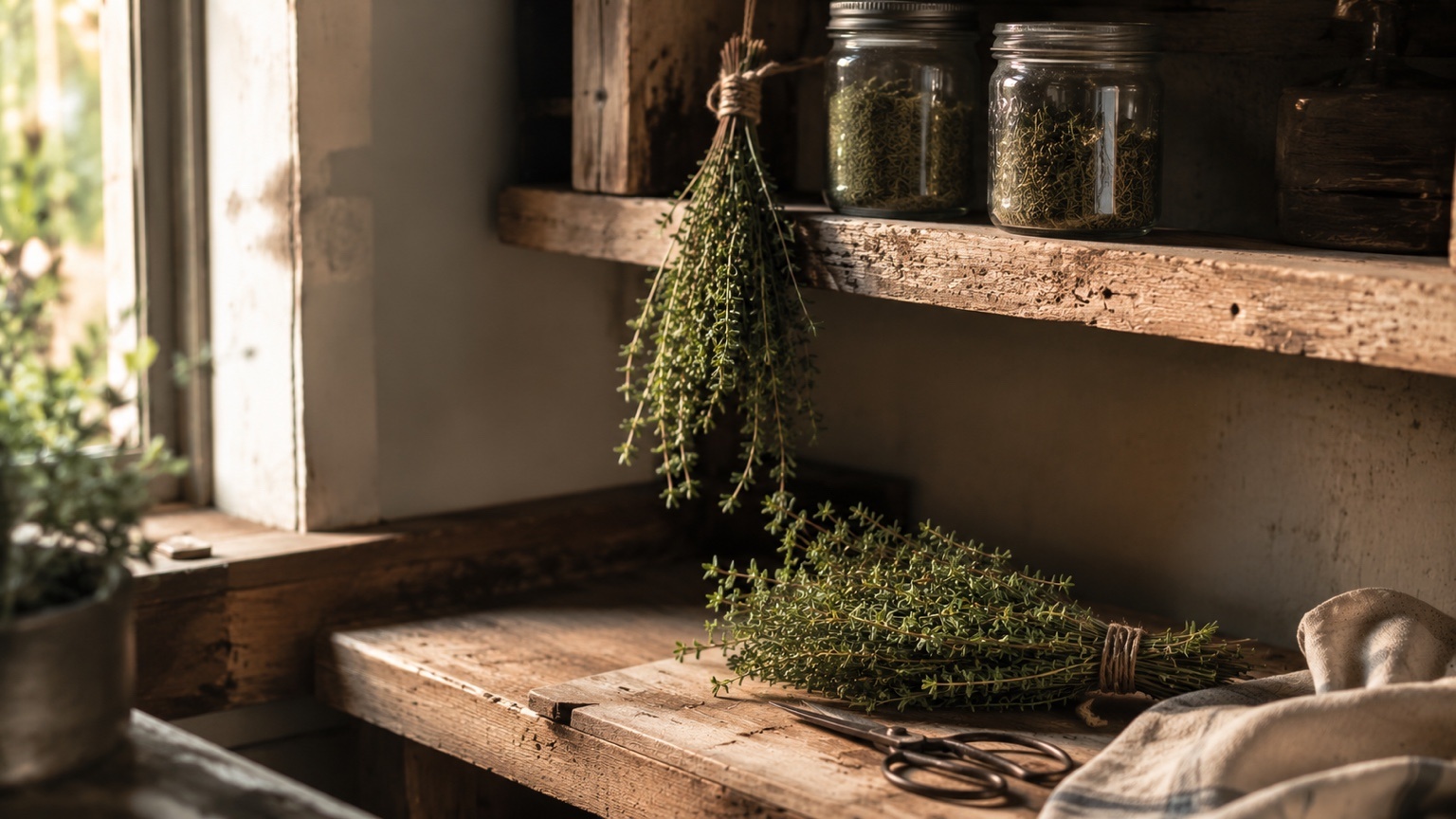
Drying thyme is one of the simplest rituals in our kitchen. There is something deeply satisfying about hanging fresh bundles and watching the shelves slowly fill with jars that will carry us into autumn and winter. Thyme dries beautifully because the leaves are small, sturdy, and naturally aromatic. Keep the bundles small so air can move through them, hang them away from direct sunlight, and wait until the leaves feel crisp before storing.

Cut healthy stems.
Choose fragrant green stems and avoid damaged leaves or old woody pieces. Shake off dust or garden debris before bringing the harvest inside.
Tie small bundles.
Gather modest bunches with kitchen twine. Smaller bundles dry more evenly and are less likely to trap moisture.
Hang in a dry place.
Hang thyme upside down in a warm, dry, ventilated area out of direct sun. A pantry, mudroom, or quiet kitchen corner can work well if the air moves freely.
Strip and store.
When the leaves are fully dry and crumble easily, strip them from the stems and store them in airtight jars away from heat, light, and moisture.
Freezing thyme
Freeze whole sprigs for the meals you know are coming.
Freezing thyme is not fancy, but it is useful. Some years we freeze whole sprigs alongside rosemary and sage. Those little bundles become shortcuts to comfort food when life gets busy. A handful dropped into stock or stew turns an ordinary weeknight dinner into something that feels slower and more intentional. You can also freeze chopped thyme in olive oil or turn fresh stems into thyme simple syrup and freeze the syrup in cubes for drinks later.
Freeze clean, dry sprigs in a labeled bag and pull them out for soups, stocks, roasted vegetables, and chicken.
Best for: soup season and weeknight cooking.
Chop thyme, pack into an ice cube tray, cover with olive oil, and freeze for roasted vegetables, potatoes, and skillet meals.
Best for: savory cooking.
Make thyme simple syrup, freeze it in small cubes, and use it in lemonade, tea, cocktails, mocktails, and sparkling water.
Best for: garden-to-glass drinks.
Storing the harvest
Store thyme where it can quietly become part of everyday life.
A jar of dried thyme on the shelf does not look dramatic, but it changes the way you cook. It becomes the thing you reach for when soup needs depth, when bread needs a little garden tucked inside, or when vegetables need something warmer than salt and oil.
Keep dried thyme airtight.
Store dried leaves in a sealed jar away from light and heat. Label the jar with the harvest date so you know when the flavor is at its best.
Keep freezer thyme simple.
Use small bags, flat packets, or ice cube trays so the harvest is easy to grab. The easier it is to use, the more often it will make it back to the table.
Keep syrup cold.
Refrigerate thyme syrup for short-term use or freeze it in cubes if you want garden flavor ready for future drinks.
Raised around the table
Thyme has a way of making the kitchen feel settled.
Dried bundles and frozen sprigs are useful, but they are only part of the story. Thyme comes back to life when it meets heat — in soup bubbling slowly, roast chicken browning in the oven, potatoes crisping at the edges, and bread filling the room with that unmistakable smell of home.
Some herbs feel like celebration. Thyme feels like comfort. It is the flavor of simple meals, cozy evenings, and the kind of dinner that does not need to be impressive to be remembered.
Thyme is one of those herbs we do not always notice first, but we miss it when it is not there. Stephanie reaches for it when a meal needs to feel grounded — when the day has been full, the kitchen is busy, and dinner needs to bring everyone back to center.
We preserve thyme because autumn comes. Because soup season returns. Because bread will be baked, chicken will be roasted, and the people we love will need to be fed.
Favorite comforts around our table
The dishes and drinks that make thyme feel like home.
Most of the time, preserved thyme is not used for special occasions. It simply becomes part of everyday life. A few stems deepen soup, perfume bread, season roast chicken, melt into compound butter, or soften a simple drink into something worth sipping while dinner comes together. These are not complicated recipes. They are the kinds of meals that make people drift toward the kitchen before anyone calls them to the table.
Thyme Roast Chicken
Chicken roasted with thyme, garlic, lemon, and garden vegetables. Simple meals like this ask everyone to sit down for a while.
Coming soon: Thyme Roast Chicken
Vegetable Soup with Thyme
Chicken noodle soup, potato soup, vegetable stew — the meals that warm a house and make the day feel softer.
Coming soon: Thyme Vegetable Soup
Thyme Focaccia Bread
Focaccia, biscuits, or fresh bread with thyme and olive oil. The smell alone makes the kitchen feel alive.
Coming soon: Thyme Focaccia Bread
Thyme Compound Butter
Soft butter folded with thyme, garlic, salt, and lemon. Melt it over vegetables, bread, chicken, or potatoes right before serving.
Coming soon: Thyme Compound Butter
Thyme Simple Syrup
A gentle herbal syrup for lemonade, iced tea, gin drinks, bourbon sours, and sparkling mocktails. Thyme keeps drinks grounded instead of perfume-heavy.
Continue the story
Keep Thyme Close
Thyme is one of those herbs we rarely notice until it is not there. A soup tastes flatter. Bread feels incomplete. Roast chicken misses something familiar. It is not dramatic. It does not demand attention. Yet somehow, it quietly makes ordinary meals feel more welcoming. Perhaps that is why we always dry a few extra bundles each year. Home has a smell. For us, thyme is part of it. Because what begins in the garden eventually becomes something much greater — a meal shared, a memory made, a house that feels like home. Rooted in the garden. Raised around the table.

Thyme harvest questions
FAQ
Yes. Thyme can be harvested lightly throughout the growing season. Regular trimming encourages fresh growth, but avoid cutting deeply into old woody stems.
Tie small bundles and hang them upside down in a warm, dry, ventilated place out of direct sunlight. When the leaves feel crisp and crumble easily, strip them from the stems and store them in airtight jars.
Yes. Freeze whole sprigs, chopped thyme in olive oil, or thyme simple syrup cubes. Whole sprigs are especially useful for soups, stocks, stews, and roasted dinners.
Dried thyme is best within six months to one year if stored away from heat, light, and moisture. If it still smells fragrant when rubbed between your fingers, it is still useful.
The strongest leaf flavor usually comes before flowering, but thyme flowers are edible and beautiful. After flowering, trim the plant lightly to encourage new leafy growth.
Dried thyme can be used for syrup if fresh thyme is not available, but use less than you would fresh thyme and strain carefully. Fresh sprigs are better for garnishes and drinks where appearance matters.
Drink responsibly. Every mocktail on this site is just as good as the cocktail version. Enjoy the garden. Enjoy the bar. Be safe, be kind, and look after each other.