01
Begin With Wonder
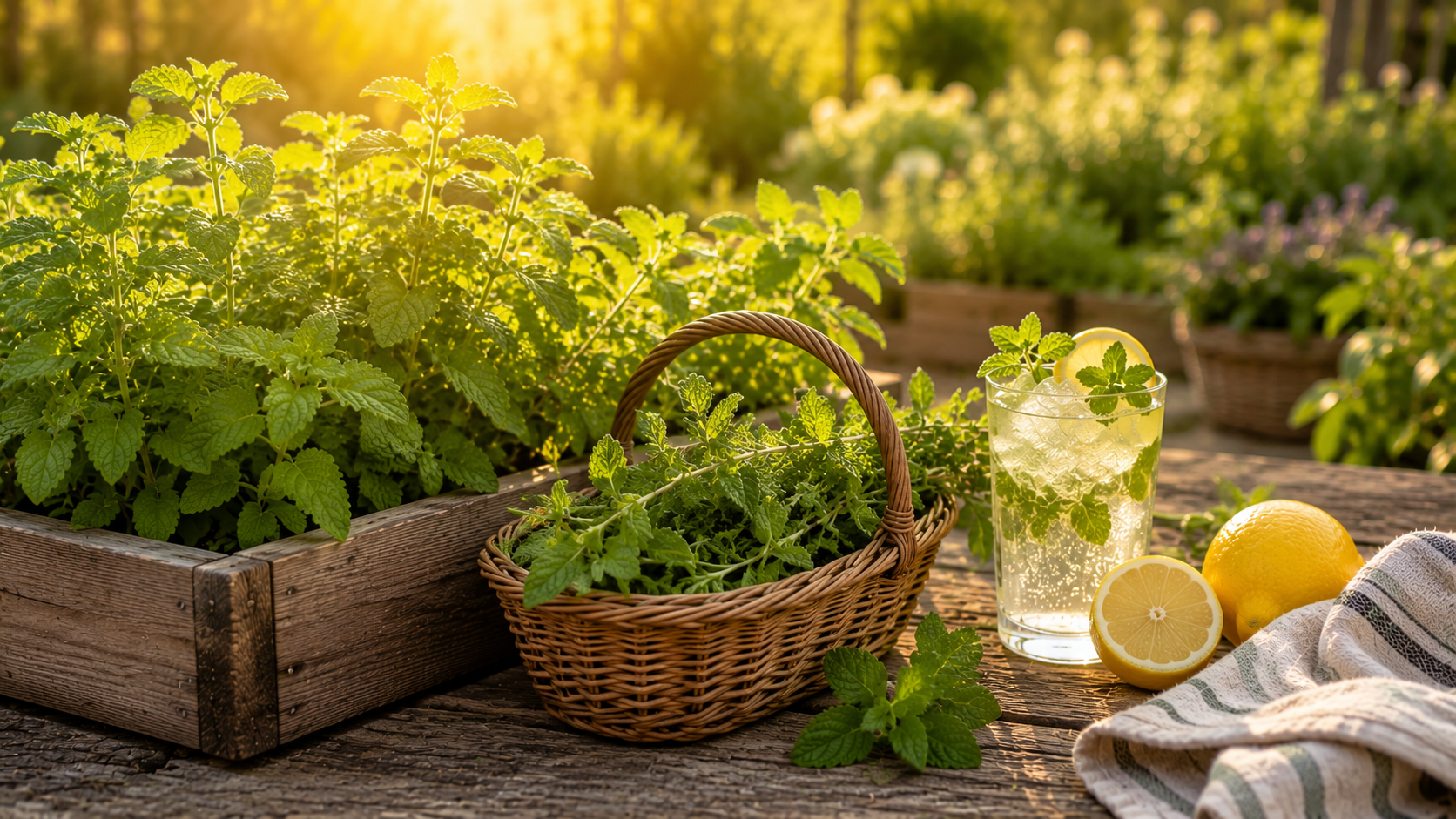
Lemon balm reminds me that it is okay to plant something because the fragrance catches your attention and makes you want to learn more.
Lemon Balm Harvest Hub
I planted lemon balm because I wanted to try something new. The fragrance stopped me first; the possibilities keep bringing us back.
Rooted in Wonder
Some herbs come into the garden with years of tradition behind them. Lemon balm came into ours because I wanted to try something new.
I loved the smell first — bright, lemony, clean, and cheerful. We planted three container plants, made our first cups of tea, and started wondering where this little herb might lead us next.
Sometimes the best things in the garden begin with, “Let’s see what happens.” Gardening does not always start with mastery. Sometimes it starts with wonder, a small act of trust, and the willingness to learn alongside the people we love.
That season of discovery roots us too. When we share the trying, tasting, laughing, and learning, the garden becomes more than a place where things grow. It becomes a place where new family traditions begin.
Lemon balm reminds me that it is okay to plant something because the fragrance catches your attention and makes you want to learn more.
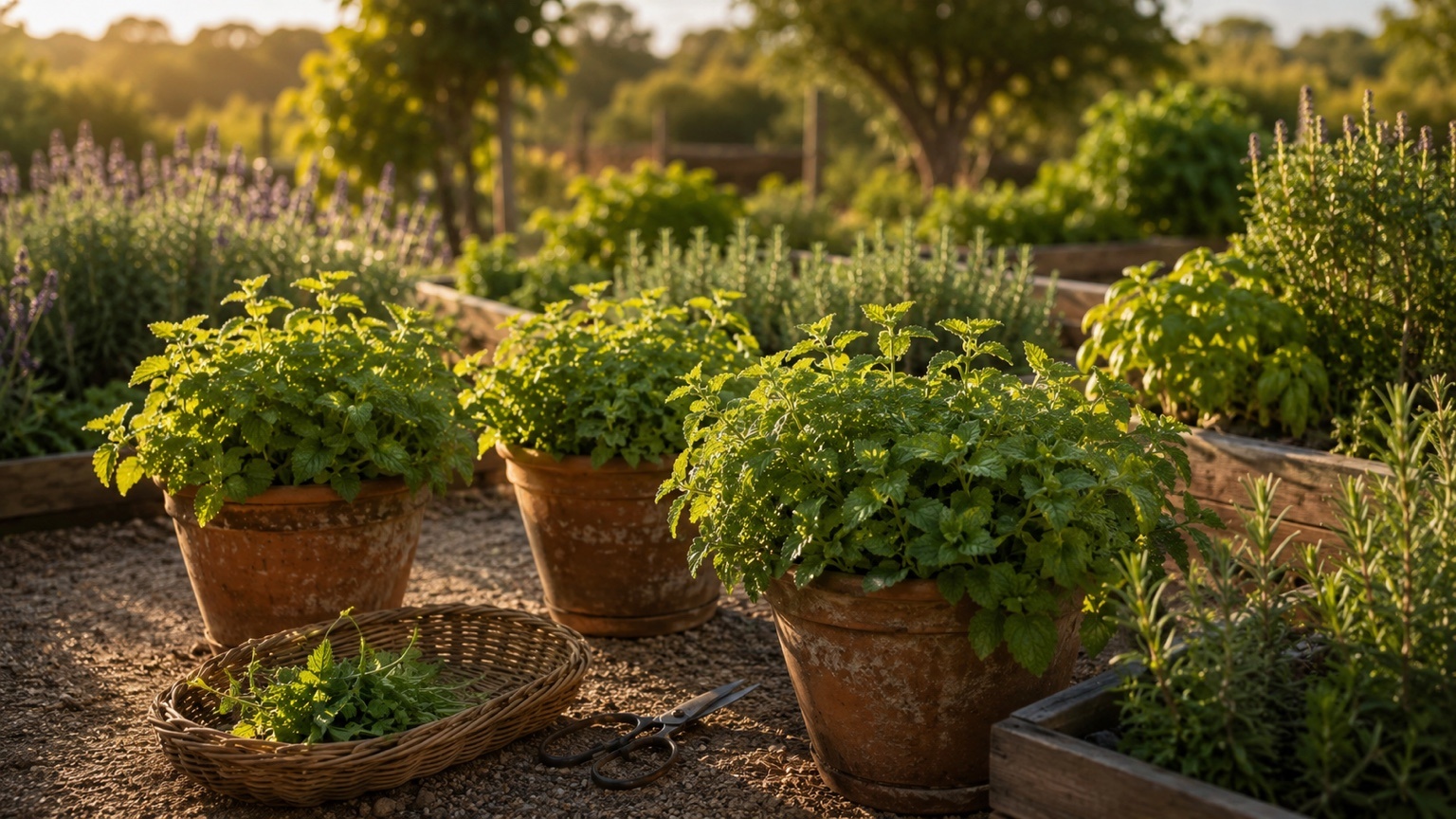
We grow our three plants in containers because lemon balm belongs to the mint family and can spread freely when it has too much room.
Fresh lemon balm tea has become our starting place — simple, fragrant, and easy to share while we dream about syrup, lemonade, and garden drinks still to come.
Our biggest challenge so far is not heat or pests. It is Stella, our canine harvester, who seems just as interested in lemon balm as we are.
From Our Garden
Right now, lemon balm is still new to us. We have three container plants, and every time I walk past them I wonder two things: what should we try next, and did Stella help herself again?
That might sound small, but it is exactly the kind of garden moment I love. A new herb does not need a long history behind it to matter. Sometimes it begins with a scent, a question, and a little laughter when the dog decides the fallen leaves are worth investigating.
The garden has always been a place where we learn by doing. Some plants become favorites because we know exactly how to use them. Others become favorites because they invite us to pay attention and see where the season leads.
Tea has already become part of the journey. Syrup is coming soon. The dogs wander nearby, the containers catch the evening light, and those bright leaves keep reminding me that wonder can be just as grounding as tradition.
I love that this little herb belongs to all of us in its own way — to the people who will gather around the table, to the pollinators moving through the garden, and apparently to Stella, who approved from the beginning.
Sometimes the best things in the garden begin with, “Let’s see what happens.”
Around the Table
Tea is where lemon balm first found its way into our home. A handful of leaves, warm water, and that gentle lemon fragrance became the first chapter of a new garden-to-table story.
What I love most is that we are not writing from mastery here. We are building these traditions in real time. Syrup is coming soon. Lemonade, mocktails, cocktails, desserts, and fresh summer drinks are all waiting patiently for their turn.
Some recipes are inherited. Others are discovered together. Lemon balm feels like the kind of herb that invites everyone in — family, friends, curious visitors, and anyone willing to taste something new and ask, “What should we try next?”
That is part of being raised around the table. We do not only share finished recipes. We share the process, the experiments, the laughter, and the small surprises that become family memories.
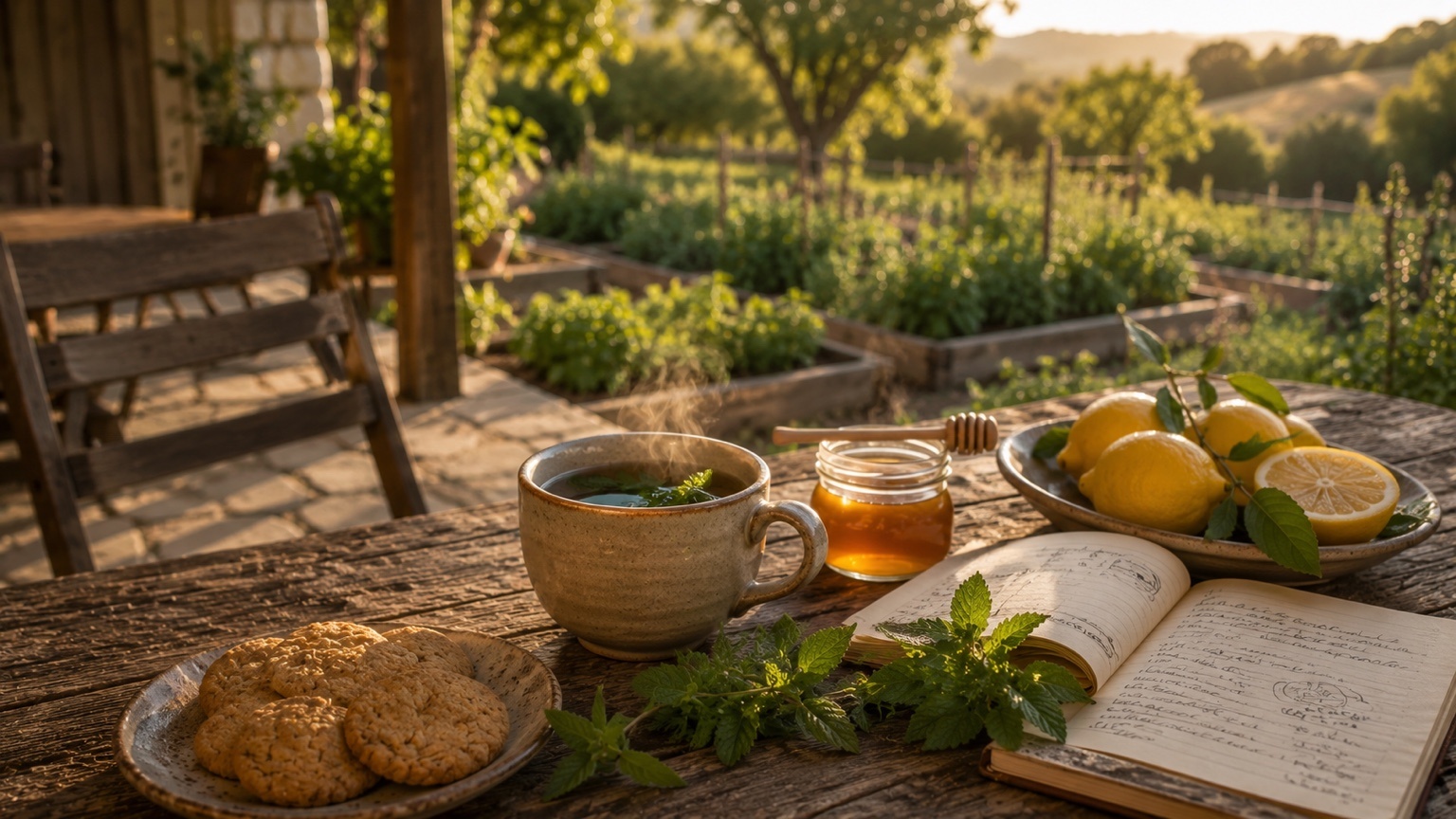
The first way we started using lemon balm was simple tea — fresh leaves, warm water, and that soft lemony fragrance that made us want to keep exploring.
This is the one I keep thinking about. A bright homemade syrup could turn lemonade, sparkling water, cocktails, and mocktails into something that tastes like summer still unfolding.
Home is not only the people around the table. It is the dogs following us through the garden, bees visiting the flowers, and friends stopping by to see what is growing. Stella made sure lemon balm became part of the story too.
At a Glance
Lemon balm is forgiving, fragrant, and generous — a cheerful container herb for anyone who wants to keep learning, keep tasting, and keep finding new ways to bring the garden to the table.
Perennial herb in the mint family with soft lemon-mint fragrance.
Full sun to partial shade. More sun brings stronger fragrance.
Hardy in zones 3–9 and reliable in many home gardens.
Containers are our choice because they keep this curious herb contained.
Pick fresh young leaves before flowering for the brightest flavor.
Tea now, syrup soon, plus lemonade, cold infusions, mocktails, cocktails, and desserts.
Saving the Season
We have not dried lemon balm yet. We have not frozen it. We have not shared bundles with friends. And for this page, that honesty matters.
This is the part of the story that is still unfolding. Maybe we will dry some for winter tea. Maybe we will freeze leaves into ice cubes for summer drinks. Maybe the first syrup will become a family favorite, or maybe it will lead us toward an idea we have not found yet.
The joy is not only in what we have already done. It is also in what still lies ahead. Lemon balm reminds me that the learning phase is not something to rush through. Sometimes that is where the roots grow deepest.
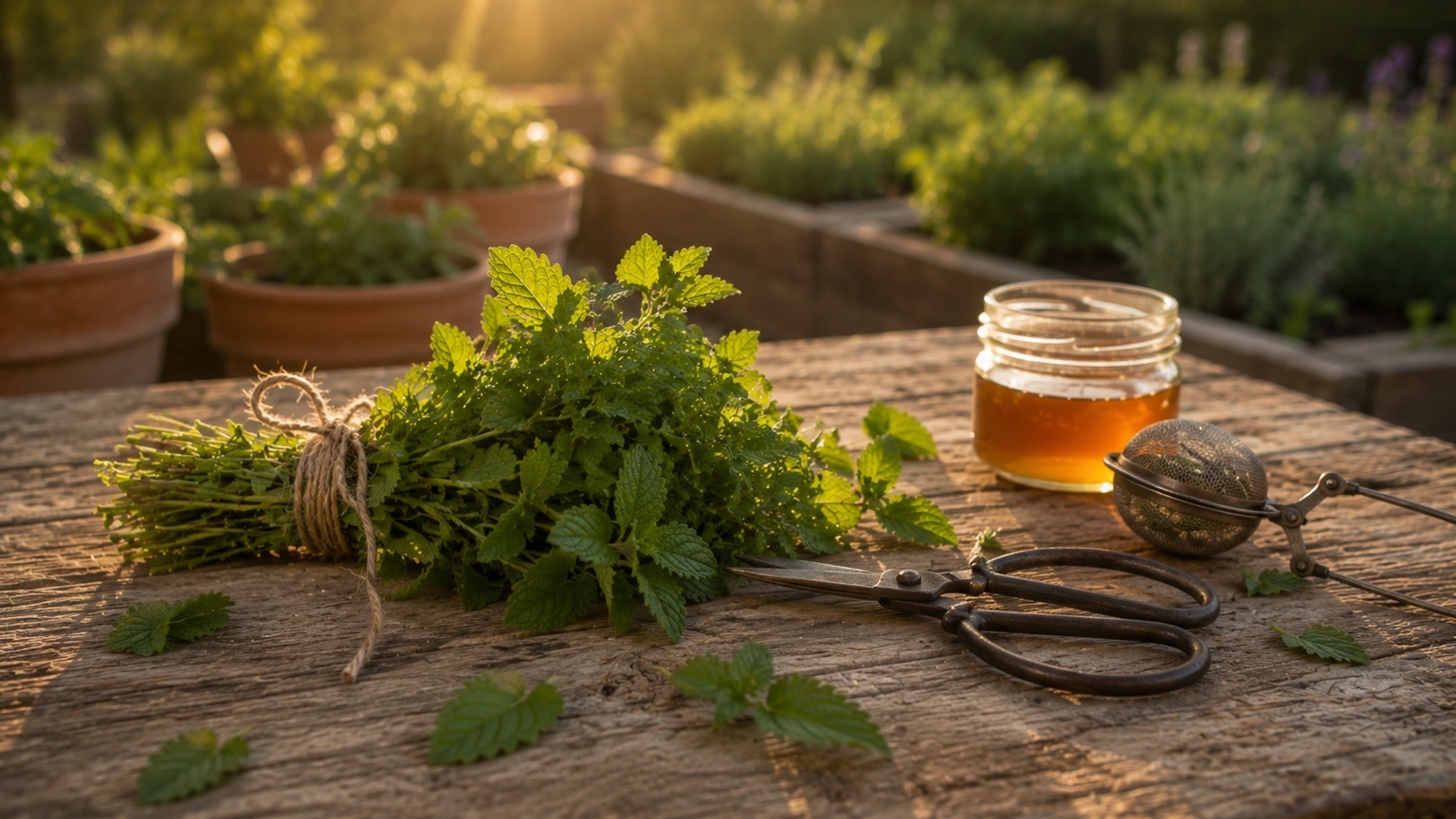
A future experiment for us: gentle dried lemon balm leaves tucked away for cool evenings, quiet cups, and the next season of learning.
Fresh leaves frozen into ice cubes could carry that lemony fragrance into lemonade, iced tea, sparkling water, and whatever we pour next.
The syrup is coming soon. I can already imagine it brightening mocktails, cocktails, lemonade, desserts, and new family favorites.
Continue the Garden
Lemon balm belongs beside the herbs that remind us why we garden in the first place: to learn, to nourish, to gather, and to share what grows with the people and pets we love.
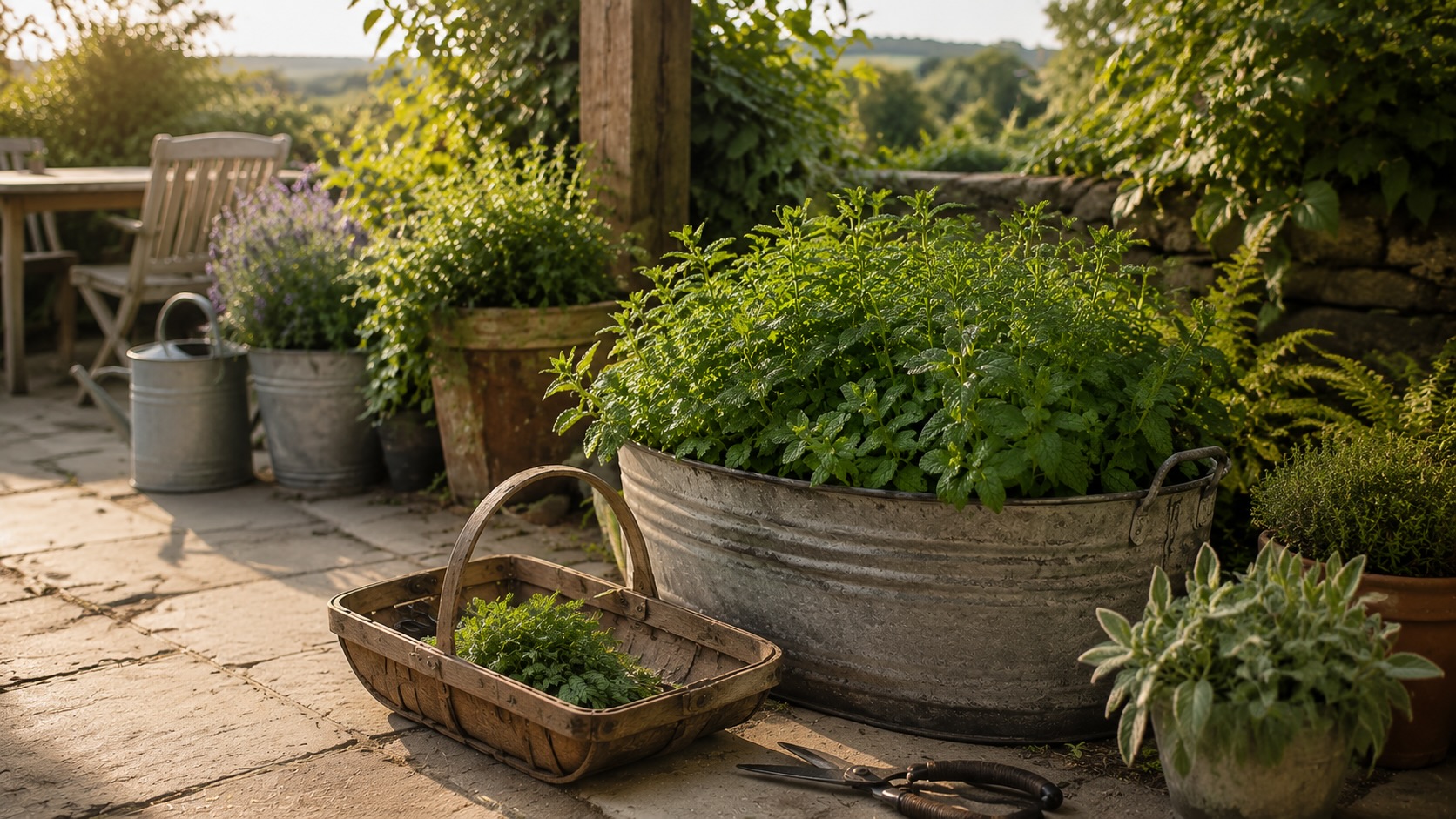
The refreshing herb of abundance, iced drinks, garden experiments, and summer energy.
Read the guide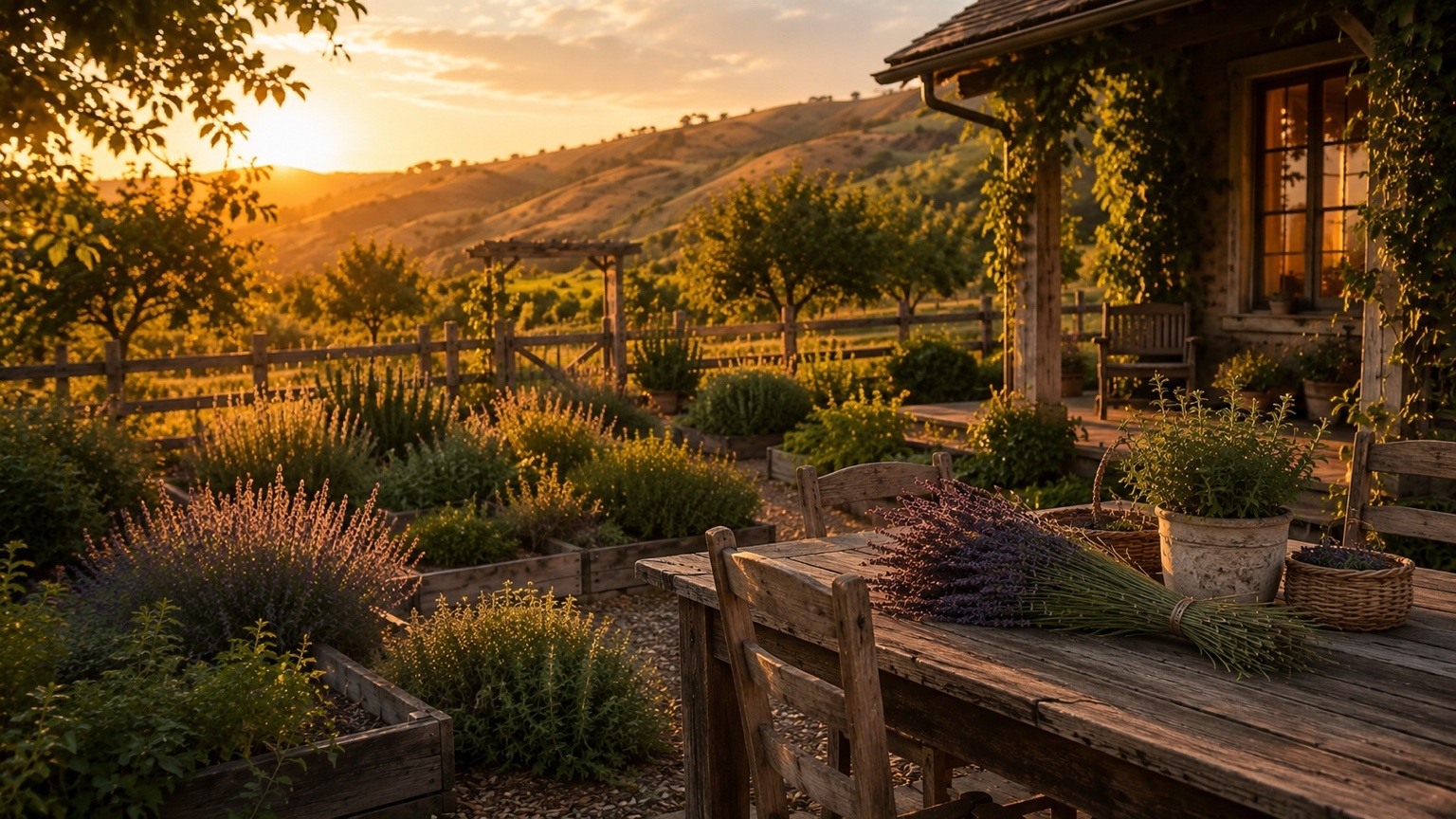
The herb of quiet beauty, hospitality, tea, syrup, and gentle moments around the table.
Read the guide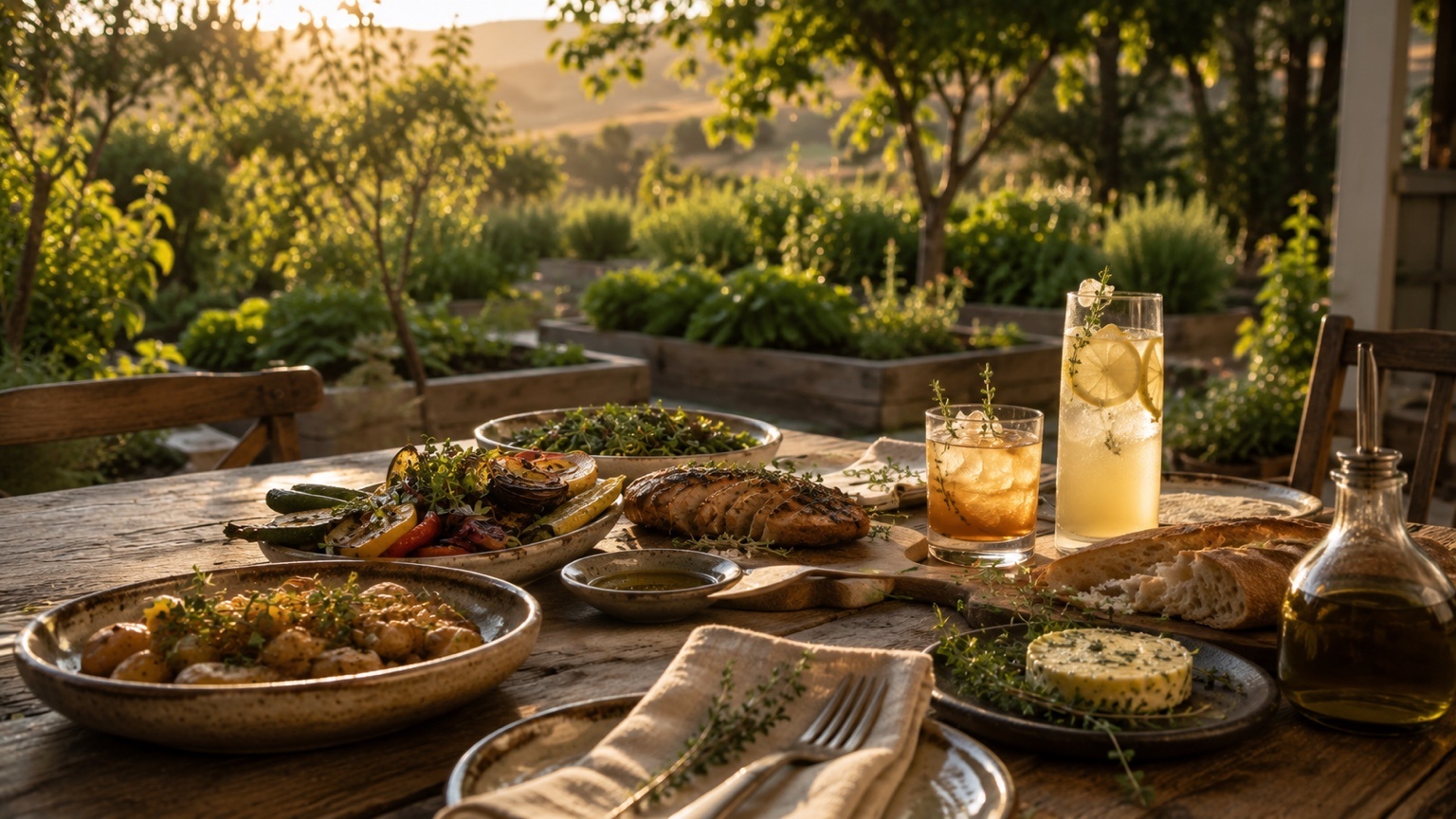
The aroma of home — garden herbs, warm meals, and everyday comfort around the table.
Read the guide
Questions answered
The questions that come up most often — answered simply from the garden, kitchen, and glass.
Lemon balm tastes like a gentle, slightly minty lemon — softer and more floral than lemon verbena, less sharp than lemon zest, and completely different from lemon juice. The flavor is delicate and aromatic rather than assertive. In a drink it reads as a soft citrus background note that makes everything feel lighter and fresher without announcing itself. It's an herb that flatters rather than leads.
Lemon balm is one of the easiest herbs to welcome into a kitchen garden. It tolerates a wide range of conditions, including partial shade, average soil, and occasional neglect. The main consideration is containment — it is in the mint family and spreads by runners. Plant it in a container or use a root barrier in the ground. Once contained, it is remarkably forgiving and produces plenty of harvestable leaves all season.
Lemon verbena has a much stronger, more concentrated lemon flavor — intensely citrus and almost lemony soap-like in high concentration. Lemon balm is gentler, more floral, and with a soft mint undertone. Lemon verbena is a shrub that needs frost protection in colder climates; lemon balm is a perennial that comes back reliably from zone 3. For cocktail use, lemon verbena makes a more impactful syrup; lemon balm makes a more delicate, nuanced one. Both are worth growing.
Yes — lemon balm is a perennial herb that returns reliably each spring from zone 3 upward. It dies back to the ground in winter in colder climates and regrows vigorously in spring. In zones 7 and above it may retain some foliage through winter. It is one of the most cold-hardy herbs we can grow for the kitchen and glass, making it an excellent choice in northern or cooler climates where lavender and basil may struggle.
Combine equal parts sugar and water and heat until dissolved. Remove from heat, add a generous handful of fresh lemon balm leaves, about 25 to 30, and steep off the heat for 20 to 30 minutes. The flavor is delicate, so use more leaves rather than fewer. Strain, cool, and refrigerate for up to 2 weeks. For an even cleaner flavor, pack fresh leaves into cold simple syrup and refrigerate overnight.
Gin is lemon balm's most natural partner — the herb's citrus-floral notes align with many gin botanicals without competing. Vodka works well as a neutral canvas that lets lemon balm's delicacy lead. Light rum has a natural affinity with the herb's gentle sweetness. Prosecco and sparkling wine lift lemon balm's aromatic notes beautifully. Lemon balm is less successful with heavy aged spirits where its subtle flavor is overwhelmed by oak and tannin.
Both. Fresh lemon balm leaves muddle well for a direct, immediate flavor. They also make excellent garnishes — a few leaves floated on the surface of a drink or pressed against the inside of a glass releases fragrance with every sip. For more consistent, controllable flavor in mixed drinks, a syrup or cold infusion is more reliable. The cold infusion method — fresh leaves in cold water or spirits, refrigerated for several hours — produces lemon balm's most delicate and distinctive flavor.
A cold infusion is simply fresh herbs steeped in cold water, cold spirits, or cold simple syrup in the refrigerator for several hours rather than heated. The gentle extraction preserves volatile aromatic compounds that heat destroys — particularly the delicate lemon-floral notes that make lemon balm distinctive. Lemon balm cold-infused in water for 4 to 8 hours produces a flavored water that tastes more clearly of lemon balm than any hot preparation. The same technique applied to gin or vodka produces a spirit infusion with exceptional clarity of flavor.
It can — lemon balm spreads by underground runners in the same way as mint, and given free rein in a garden bed it can colonize surrounding soil within a few seasons. The solution is simple: grow it in a pot, or sink a pot into the border with the rim above soil level to prevent runners from escaping. Contained lemon balm is well-behaved, productive, and rewarding. Uncontained lemon balm can become a nuisance.
Yes, and the combination is excellent — lemon balm adds a citrus dimension that mint alone does not have. A lemon balm and mint cold infusion in sparkling water is one of the most refreshing things you can pour from the summer garden. In a mojito, replacing half the mint with lemon balm softens the drink and adds a floral lemon note that makes it feel lighter. The herbs complement each other rather than competing.
Drink responsibly. Every mocktail on this site is just as good as the cocktail version. Enjoy the garden. Enjoy the bar. Be safe, be kind, and look after each other.