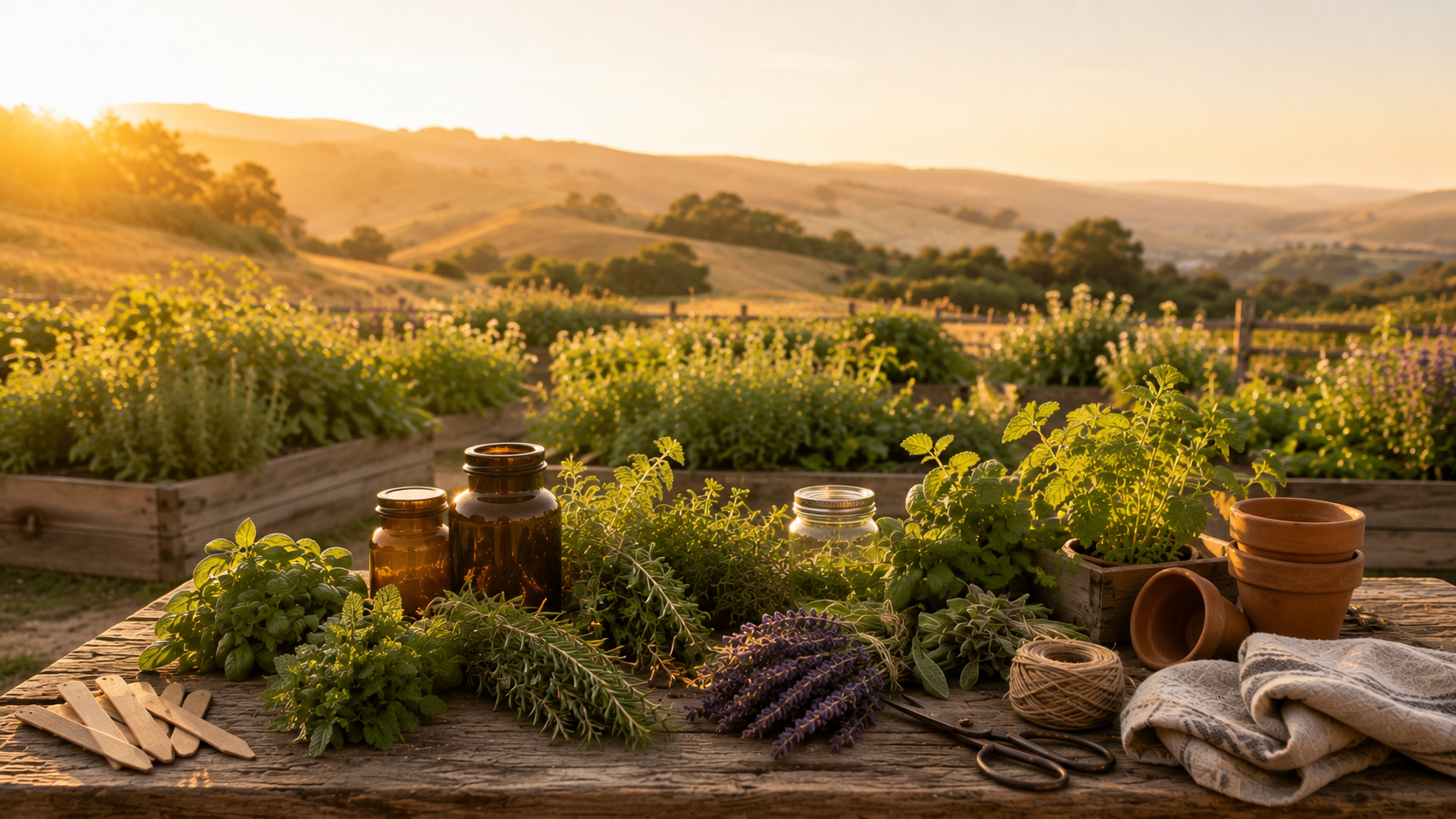
Some things have become traditions. Others are still teaching us something new. But every season brings another reason to gather, share, and be grateful for the simple things.
A few of our favorite traditions began with a simple question: "Let's see what happens." And somewhere between the garden, the kitchen, and the people we love most, we found ourselves growing something bigger than we expected.
We did not build this garden because we had everything figured out. Most days, we are still learning. Some plants became traditions. Others surprised us. A few found their way into our garden simply because we were curious. And somewhere between muddy paws, evening meals, tea on the patio, and conversations that lasted longer than we planned, we realized we were growing something bigger than herbs and harvests. We were growing memories. That is why we keep planting.
🌿
The garden slows us down
Fresh herbs and harvests ask us to pay attention. The scent of mint, basil, rosemary, lavender, thyme, lemon balm, or ripe plums has a way of pulling us outside and reminding us to notice what is growing right in front of us.
🍽️
Everything leads back to the table
A garden harvest becomes tea on the patio, pizza night, a jar of jam, a simple syrup, a cocktail, a mocktail, or a meal shared with family. The best part is not only what we make, but who we share it with.
📅
The season becomes the menu
Lavender blooming in June, basil overflowing in August, rosemary standing through winter, and plums arriving for a short sweet window — the harvest tells us what to make next.
🪴
Small beginnings are enough
You do not need a perfect garden. You do not need years of experience. One container can become a beginning, and one small harvest can give you the confidence to plant the next thing.
🏠
Home includes the harvest
The garden follows us inside. Herbs dry on the counter, syrup chills in the fridge, jam lines the pantry, and somehow everyone — even muddy paws — gathers near what is growing.
🍹
Drinks become part of the story
Cocktails and mocktails are one more way to preserve a season, welcome a friend, cool down after a hot day, and raise something beautiful from what we grew ourselves.
The harvest hub
Herbs & Harvests We Return To
These are the herbs and harvests that keep showing up in our garden, our kitchen, our glasses, and our memories. Each one has its own personality. Mint brings hospitality. Basil brings abundance. Lavender brings peace. Rosemary brings tradition. Thyme brings home. Lemon balm brings wonder. Plum reminds us to savor the season.
Mint
🌿
Easy
Hospitality in leaf form. There always seems to be enough mint for one more drink and one more conversation.
Cocktails
Mojito, Mint Julep, Southside, Moscow Mule, Mint Smash
Mocktails
Mint lemonade, cucumber mint cooler, sparkling mint agua fresca
You do not need a perfect garden. You do not need experience. And you certainly do not need to know everything. Start with one container. Plant something that makes you smile. Learn as you go. Some of our favorite traditions began with: “Let’s see what happens.”
01
Mint
Mint is nearly indestructible, which makes it one of the most encouraging places to begin. Grow it in a container, harvest it often, and you will almost always have enough for tea, limeade, mojitos, juleps, and one more drink for someone who stopped by.
02
Basil
Basil is the easiest annual herb to fall in love with. It loves warmth, rewards regular picking, and turns summer into pizza night, Caprese, pesto, lemonade, and the happy problem of having more than enough.
03
Rosemary
Rosemary is steady. Plant it once in the right place and it becomes part of the garden for years. It asks for little, gives a lot, and brings tradition to cooler evenings, roasts, syrups, and bourbon sours.
04
Lemon Balm
Lemon balm is for anyone who wants to stay curious. It grows easily, smells wonderful, and invites simple experiments — tea first, syrup next, and whatever the season teaches after that.
Through the seasons
Every Season Has Something to Offer
Spring gives us fresh growth and new possibilities. Summer gives us overflowing beds, family dinners, and evenings that seem to last forever. Autumn asks us to preserve what we can and enjoy the harvest while it lasts. Winter gives us time to dream, remember, and wait for another season to begin.
🌸 Spring
Spring Awakening
MintLemon BalmChivesTarragon
Fresh growth, first cuttings, and the excitement of seeing what made it through winter.
A slower season for dreaming, remembering, planning, and waiting for another season to begin.
→ Make: Rosemary Negroni · Lavender Hot Toddy · Thyme Old Fashioned
How we harvest
Harvest Gently, Use What You Can, Share What You Have
The garden teaches patience. Harvest gently. Use what you need. Preserve what you can. Share what you have. And remember that every season eventually becomes a memory.
01 — Timing
Harvest in the morning
Most herbs are most fragrant in the morning, before the heat of the day takes the edge off their oils. If you are making syrup, tea, or a pitcher for later, cut your herbs that morning and keep them in a glass of water until you are ready.
02 — Technique
Cut, don't pull
Use clean scissors or snips instead of pulling or tearing. For mint and basil, cut just above a leaf node so the plant branches and grows fuller. For rosemary and thyme, take small stems from the tips and leave plenty behind.
03 — Washing
Rinse gently, dry well
Rinse herbs under cool water and shake off the excess. Pat garnishes dry so the finished drink looks clean and intentional. Herbs going into syrup can carry a little extra moisture — they are headed for the pot anyway.
04 — Storage
Keep them like flowers
Store cut herbs in a glass with an inch of water, loosely covered in the fridge. Basil is the exception; it hates cold, so keep it on the counter like a small bouquet. A little care gives you several more days to use what you harvested.
05 — Preserving
Turn surplus into syrup
When the garden gives more than one meal can use, make syrup. Equal parts sugar and water, steeped with herbs off the heat, becomes lemonade, cocktails, mocktails, tea, and ice cubes for later.
06 — Drying
Dry what you can't use
Rosemary, thyme, and lavender dry beautifully. Mint and basil are better captured as syrup or frozen into cubes. The point is not to save everything. It is to carry the best parts of the season forward.
Around the table & in the glass
How We Bring the Harvest Home
Tea. Simple syrups. Cocktails. Mocktails. Fresh meals. Preserves. Pizza night. Friends around the table. Warm kitchen lights. Dogs hoping something falls to the floor. These are some of our favorite ways to bring the harvest home.
🍯
Simple Syrups
The most useful way to carry the garden into future drinks. Syrup turns a short harvest into lemonade, tea, cocktails, mocktails, and gifts from the kitchen.
→ Best for: Lavender, rosemary, thyme, mint, lemon balm
🫙
Infusions
Infusions are slower and more patient. A few stems in gin, vodka, or bourbon can turn one good bottle into something that tastes tied to the season.
→ Best for: Rosemary, thyme, lavender, basil
🌿
Muddling
Muddling is immediate and generous — fresh leaves pressed gently just before serving. It works best when the herb is tender, fragrant, and close at hand.
→ Best for: Mint, basil, lemon balm
🧊
Herbal Ice Cubes
Herbal ice cubes are simple, beautiful, and practical. They make pitchers feel special and let a few leaves become part of the moment as the drink slowly opens up.
→ Best for: Mint, basil, lemon balm, borage flowers
🌸
Garnishes
A garnish should smell like the garden. Slap mint, tuck in rosemary, float lavender, or rest thyme where the first sip passes by it. Aroma is part of hospitality.
→ Best for: Mint, rosemary, thyme, lavender sprigs
🍋
Mocktails
Mocktails are not an afterthought here. Herbs bring complexity, freshness, and a sense of occasion to alcohol-free drinks — especially mint, basil, lemon balm, and lavender.
→ Best for: Lemon balm, mint, basil, lavender
From the harvest
Recipes, Preserves & Seasonal Inspiration
One harvest always seems to lead to another. A handful of mint becomes iced tea. Too much basil becomes pesto. Lavender becomes simple syrup. Plums become jam. And somehow every season leaves us dreaming about what we might grow next.
Mint is the easiest garden herb to grow — it's almost indestructible, grows fast, and comes back every year. The only rule: always grow it in a container, as it spreads aggressively underground. Basil is the second easiest, though it needs warmth and dislikes cold nights.
Yes, several herbs and harvests grow well indoors. Mint, basil, and lemon balm do best on a bright windowsill with at least 6 hours of light. Rosemary and thyme can work indoors but prefer a sunny south-facing window or a grow light. Lavender is difficult indoors and is best grown outside or in a container you can bring in seasonally.
Mint and basil work well together in citrus-forward drinks. Rosemary and thyme complement each other in spirit-forward cocktails. Lavender pairs beautifully with lemon balm for floral, gentle drinks. For a classic garden combination, thyme and lemon verbena work exceptionally well with gin and light spirits.
Regular harvesting keeps herbs productive — even if you don't need them. For basil, harvest every 1 to 2 weeks and pinch flower buds as soon as they appear. Mint can be cut hard every few weeks and will bounce back quickly. Rosemary and thyme are slower-growing; harvest stems as needed without taking more than a third of the plant at once.
Freezing works best when you turn herbs into something first. Freeze herb-infused simple syrups in ice cube trays for a ready-to-use bar ingredient. You can also freeze whole mint or basil leaves in water to make herb ice cubes — they look beautiful in drinks. Freezing bare leaves tends to make them limp and discolored, so it's better for cooking than for garnishes.
Fresh herbs are brighter, more aromatic, and better for garnishes, muddling, and fast infusions. Dried herbs are more concentrated — use about half the quantity — and work well in syrups where you're extracting flavor over heat. Dried lavender and rosemary make excellent syrups. Dried mint and basil lose most of what makes them interesting in a drink.
Not at all. A few pots on a sunny balcony or windowsill is enough to keep a home bar stocked with fresh herbs all season. Mint, basil, thyme, and lemon balm all grow happily in containers. A half-dozen pots with different herbs will give you more than you can use.
Mint, lemon balm, and basil are the best mocktail herbs — they bring brightness and complexity without needing alcohol to express their flavor. Lemon balm in particular shines in non-alcoholic drinks because its gentle citrus notes don't need a spirit to anchor them. Lavender also works beautifully in sparkling mocktails with lemon or elderflower.
Bolting happens when herbs flower — triggered by heat, long days, or stress. Once a herb flowers, the leaves turn bitter and the plant focuses energy on seeds rather than foliage. Prevent it by harvesting regularly, pinching flower buds off as soon as they appear (especially basil), and keeping plants well-watered in hot weather. Growing herbs in partial shade during the hottest part of summer also helps delay bolting.
Rooted in the garden. Raised around the table. Some things have become traditions. Others are still teaching us something new. But every season reminds us that life is better when we gather with the people — and muddy paws — we love most.