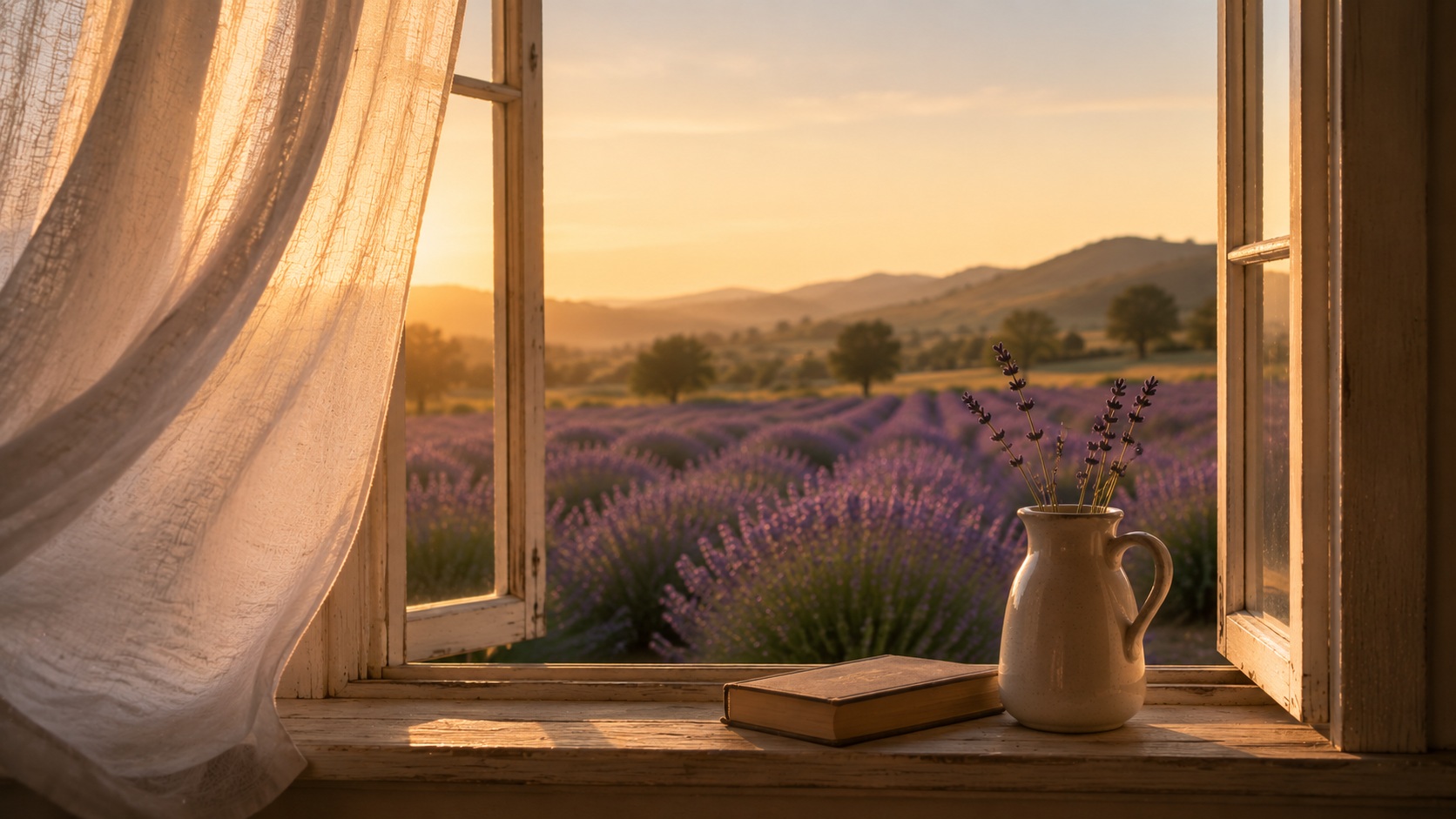
Lavender Holding Onto Peace
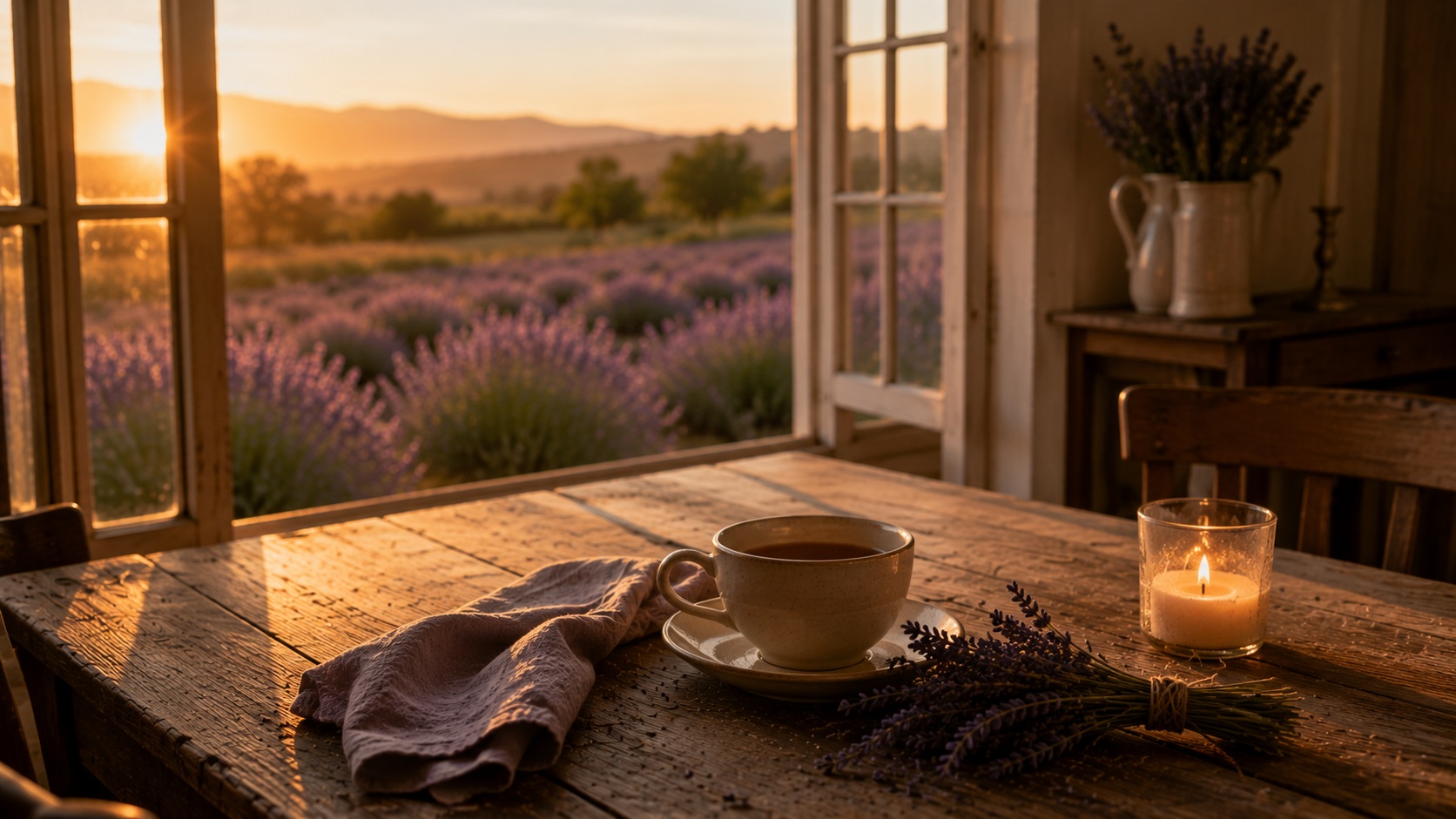
Lavender is one of the ways summer asks us to slow down. We harvest it not only for syrup, tea, lemonade, and quiet drinks, but for the simple peace its fragrance brings into the home.
The Lavender Ecosystem
Lavender begins in the garden, but its peace carries into the kitchen, the glass, the linen closet, and the table. Use these pages together as the full Lavender path.
Lavender Guide
Grow lavender for quiet summer beauty, pollinators, fragrant bundles, and garden-to-glass recipes.
Explore the Guide →Harvest & Preserve Lavender
Learn when to cut lavender, how to dry it well, and how to hold onto summer’s calm for later.
Save the Harvest →Lavender Simple Syrup
Make a gentle floral syrup for lemonade, tea, cocktails, mocktails, and quiet summer gatherings.
Make the Syrup →Seasonal Recipes
Browse cocktails, mocktails, syrups, preserves, and garden-inspired drinks from the From Bed to Bar kitchen.
Browse Recipes →Because Peace Belongs Beyond Summer
Lavender arrives in the garden like a deep breath. The bees find it first. Then the fragrance begins to drift through the beds, soft and steady, reminding us that not every harvest is about abundance. Some harvests are about beauty. Some are about rest.
We preserve lavender because its season feels too brief to let pass unnoticed. A few bundles hanging in a quiet corner can carry summer into the house for months. A jar of dried buds becomes tea after dinner, syrup for lemonade, a small gift, or a reminder to slow down when the day has been too full.
Lavender is not about doing more. It is about making space for peace.
Cut Lavender at Its Quiet Peak
The best time to harvest lavender is when the buds are formed and just beginning to open. This is when the fragrance is strongest and the stems dry beautifully. If you wait until every flower has fully opened, the bundles are still useful, but they tend to shed more and lose fragrance more quickly.
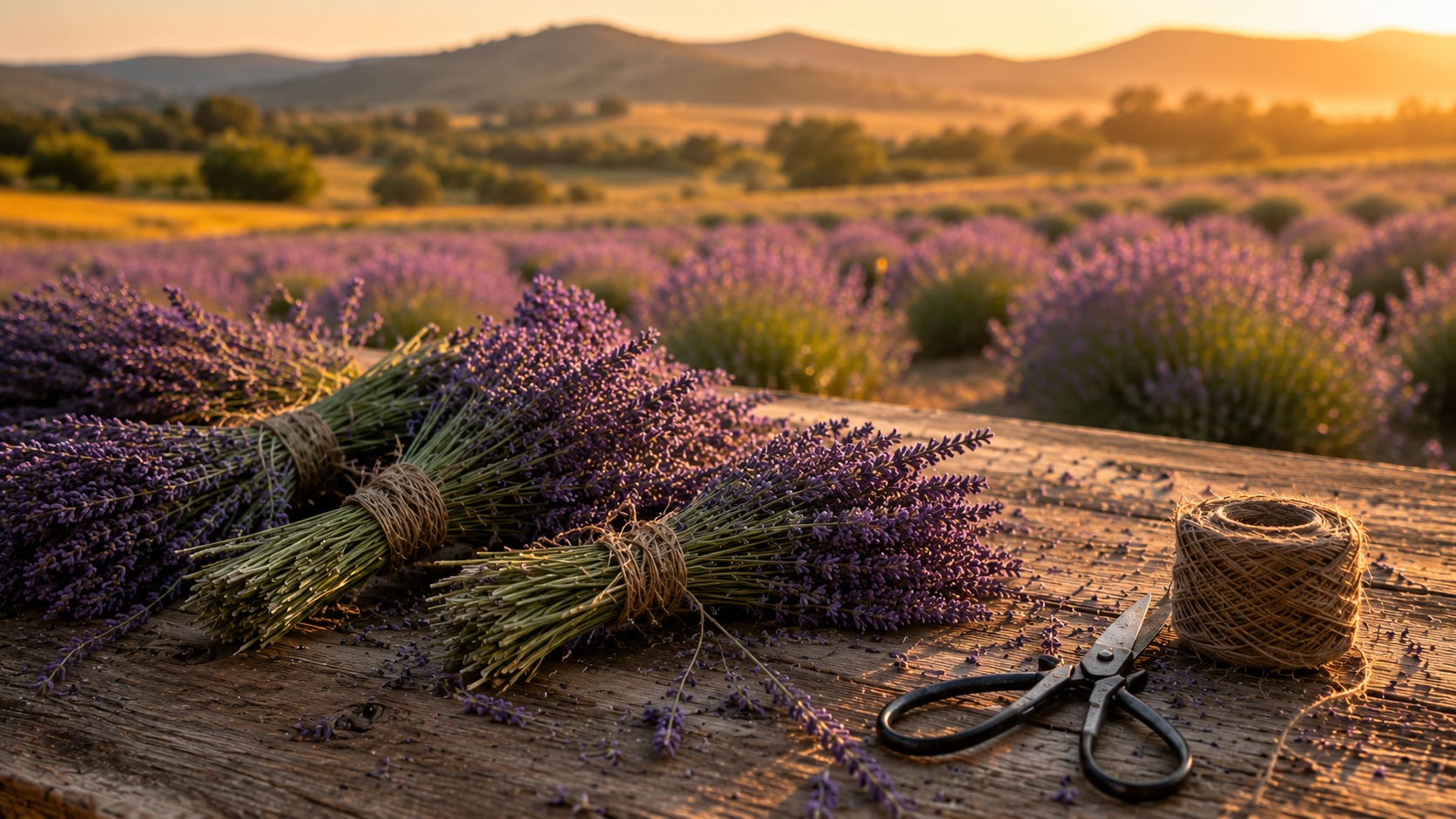
Harvest in the morning
Cut after dew has dried but before the day is hot, when the stems still feel fresh and fragrant.
Choose stems with mostly closed buds
Look for flower spikes where some buds are beginning to open, but most are still tight.
Cut above green growth
Never cut into old woody stems. Lavender does not reliably regrow from bare wood.
Bundle loosely
Gather small bundles so air can move between the stems as they dry.
Saving Summer’s Calm
Drying lavender is one of the simplest and most beautiful preserving rituals in the garden. The bundles do not need much. Just twine, airflow, shade, and time.
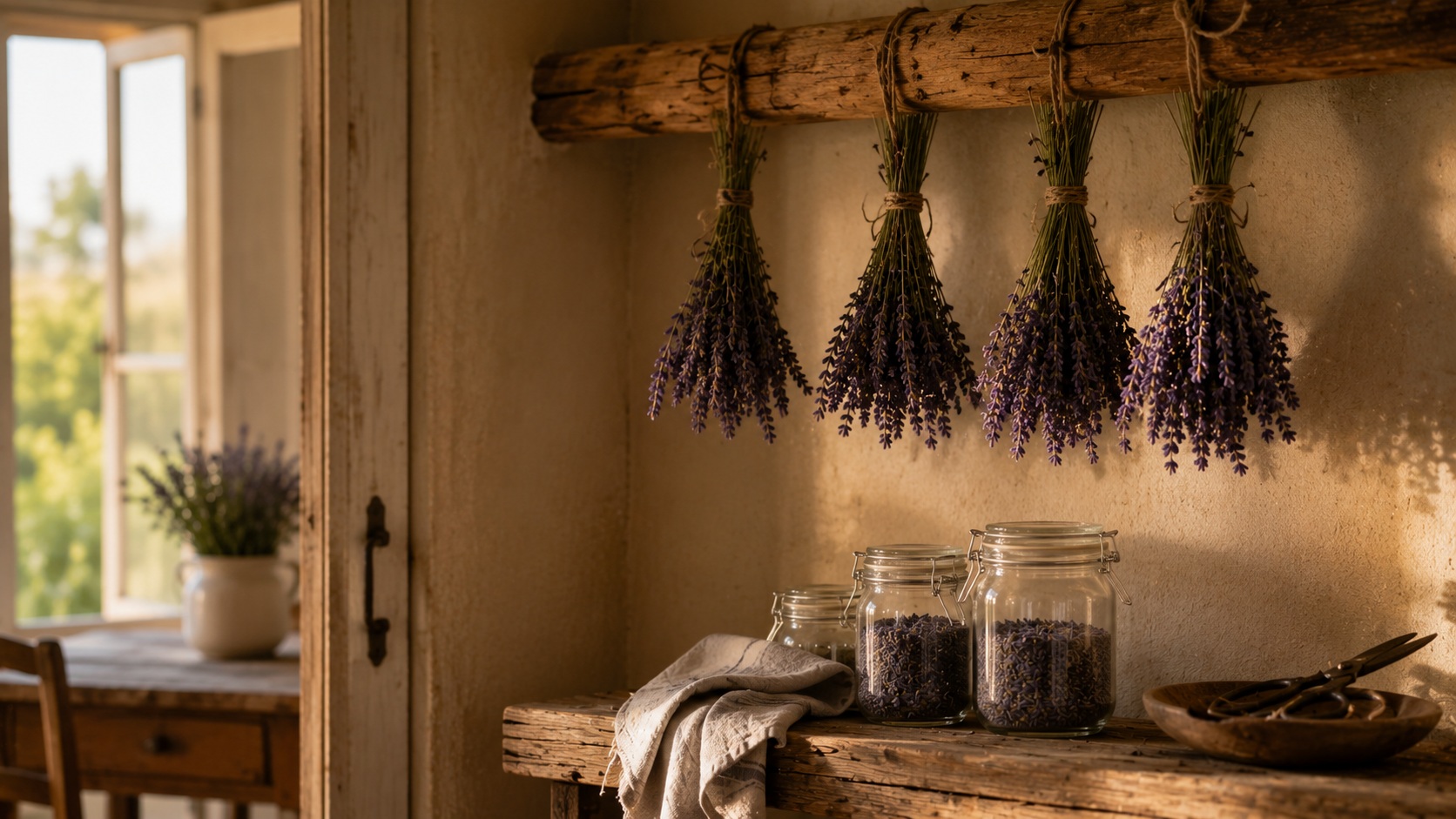
Hang Bundles
Tie small bundles and hang them upside down in a warm, dry, shaded place with good airflow.
Store Buds
Once fully dry, strip the buds gently and store them in airtight jars away from heat and light.
Make Syrup
Use dried culinary lavender to make a delicate syrup for lemonade, tea, cocktails, and mocktails.
Where Preserved Lavender Belongs
Preserved lavender moves quietly through the home. It does not need to become something elaborate to be worthwhile. Sometimes a jar of dried buds on the shelf or a bundle hanging near the pantry is enough to remind us that the garden gave us more than food.
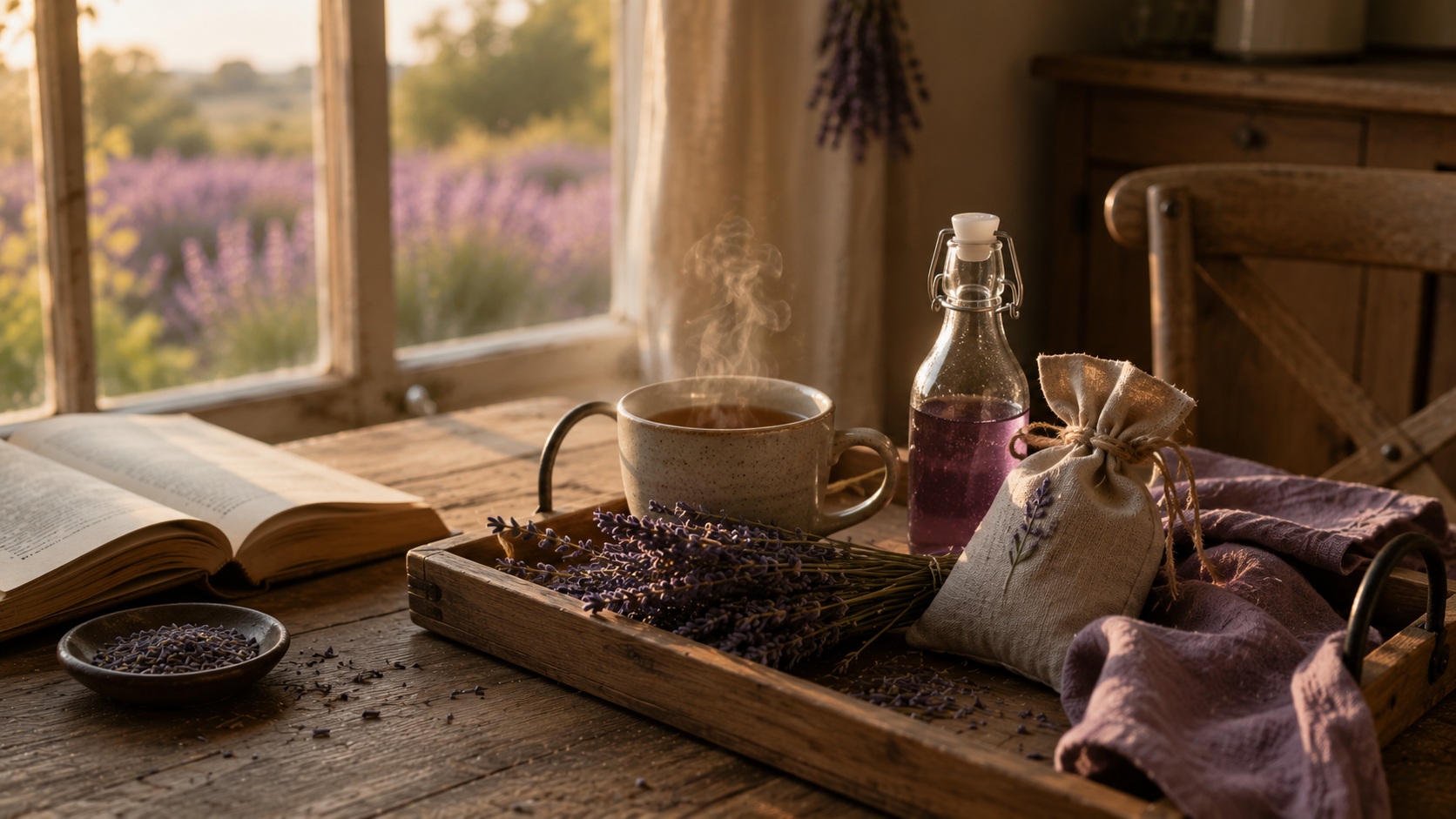
Tea & Evening Rituals
A pinch of dried lavender can soften tea blends and create a calm ending to the day.
Lemonade & Syrup
Lavender syrup brings a gentle floral note to lemonade, sparkling water, cocktails, and mocktails.
Gifts & Linens
Dried bundles, sachets, and small jars of buds make simple gifts that feel thoughtful and personal.
Holding Onto Peace
Lavender is one of those plants that changes the feeling of a place. A garden feels softer with it. A kitchen feels calmer. A jar of dried buds on the shelf feels like a promise that the slower parts of summer have not been lost.
We preserve lavender because peace is worth carrying forward. Into tea after dinner. Into lemonade on the porch. Into simple gifts. Into quiet evenings when everyone finally settles.
Rooted in the garden. Raised around the table.
Lavender Harvest Questions
Harvest when the buds are formed and just beginning to open. This gives the best fragrance and the cleanest dried bundles.
Tie small bundles and hang them upside down in a warm, dry, shaded space with good airflow for one to two weeks.
Yes. Dried culinary lavender works beautifully in syrup, but use it lightly and steep briefly so the flavor stays delicate.
Dried lavender is best within one year if stored in an airtight jar away from heat, light, and moisture.
For food and drinks, use culinary English lavender and avoid any plants that have been sprayed or treated.