The recipe
Rosemary Simple Syrup
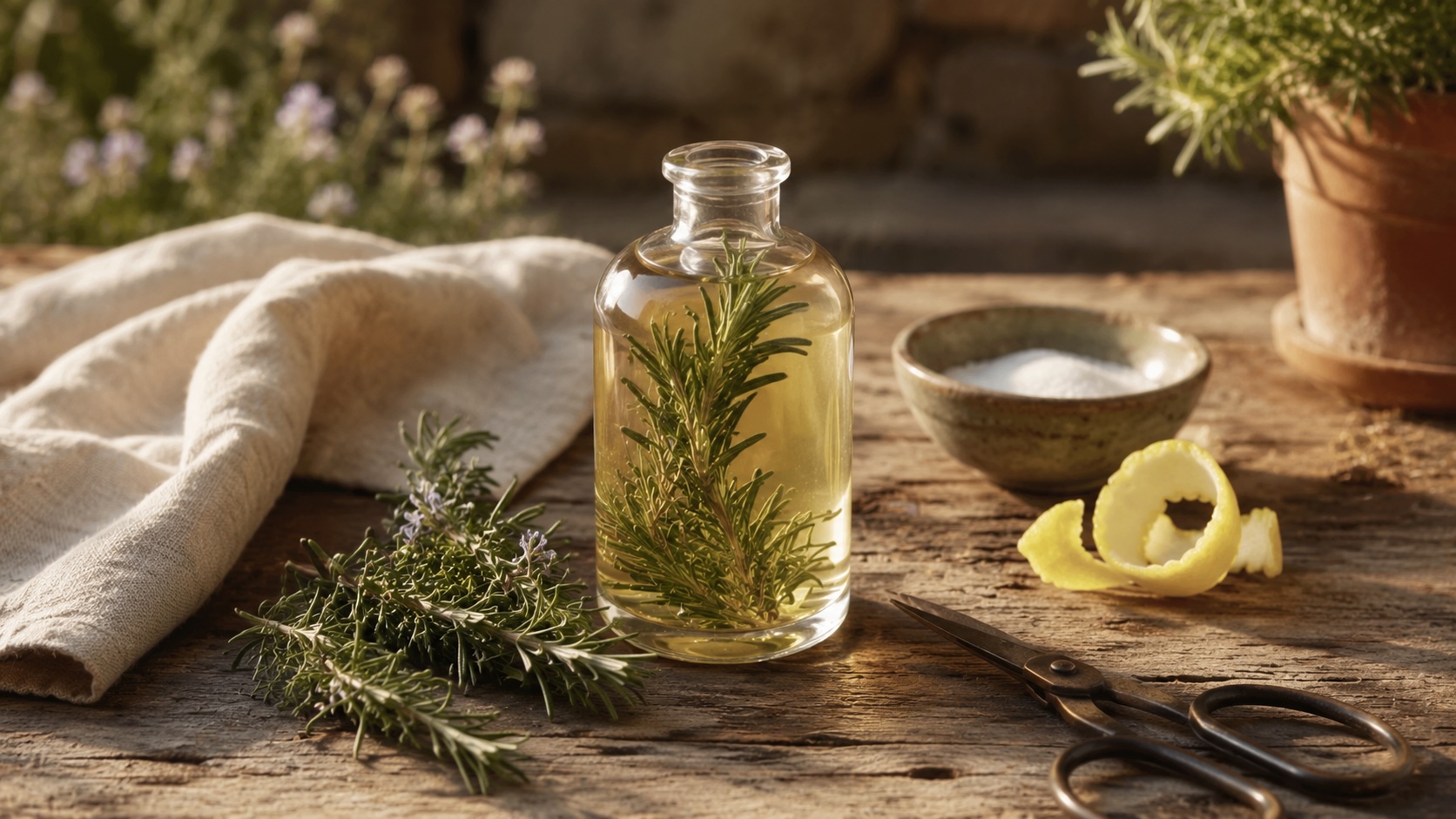
Three ingredients, one saucepan, twenty minutes of patience. The result is a syrup that carries real garden character — piney, resinous, faintly floral — without any of the bitterness you'd get from over-extracting. The steep time does the work; the heat just gets the sugar dissolved.
Step 01
Combine sugar and water
Combine sugar and water in a small saucepan over medium heat.
Step 02
Dissolve the sugar
Stir until the sugar completely dissolves. Do not boil aggressively — a gentle simmer is all you need. Boiling hard can make the syrup cloudy or slightly caramelised.
Step 03
Add rosemary
Remove from heat and add the rosemary sprigs. Add the lemon peel if using — it brightens the final syrup and rounds out any bitterness from the rosemary.
Step 04
Steep
Steep for 20–30 minutes. Taste occasionally — the flavour develops gradually and you're looking for earthy, aromatic rosemary without any harsh bitterness.
Longer steeping creates a stronger flavour. Start at 20 minutes; steep further only if you want a more assertive syrup.
Step 05
Strain
Strain out the rosemary through a fine mesh strainer. Discard the spent sprigs. Pour the finished syrup into a clean glass bottle or jar.
Step 06
Cool and refrigerate
Allow the syrup to cool to room temperature before sealing. Refrigerate and use within three weeks. Label with the date — it's easy to forget when you made it.
From the garden
Stephanie's Notes
Rosemary is a powerful herb — one of the most assertive things you can grow in the garden. A little goes a long way in a syrup, and the steep time matters more than most people expect.
Stephanie's notes
Rosemary is powerful. It's much easier to add more flavour than to remove it once the syrup is done. These habits have saved many batches:
- Start with a 20-minute steep on your first batch. Increase next time if you want more intensity.
- Taste at 15 minutes, then again at 20. Pull the rosemary as soon as the flavour feels right.
- The lemon peel isn't optional in my kitchen — it lifts the syrup and makes it more versatile in mixed drinks.
- This syrup freezes beautifully in ice cube trays. One standard cube is roughly 1 oz — thaw one directly in your shaker tin.
- Fresher rosemary from the garden gives a greener, brighter result. Older, woodier sprigs from the store can taste more resinous and medicinal.
For more on growing and harvesting rosemary at its peak, see the Rosemary Guide. The difference between fresh, actively-growing rosemary and old, dried-out sprigs is significant in a syrup.
Bar pantry
Ways to Use Rosemary Syrup
Rosemary syrup earns its place in the bar fridge. It pairs naturally with citrus, stone fruit, gin, and bourbon — and it adds depth to non-alcoholic drinks that most other syrups can't match.
Keep it fresh
Storage
Rosemary syrup stores well when handled cleanly. Keep the jar tight, keep a spoon out of the bottle, and label it with the date you made it.
Refrigerator
Up to 3 weeks
Store in a sealed glass jar or bottle. An amber bottle keeps out light and extends freshness. Label with the date.
Freezer
Up to 6 months
Pour into ice cube trays and freeze solid. Transfer cubes to a freezer bag. Each standard cube is roughly 1 oz — thaw as needed.
Best container
Amber bottle or mason jar
Store in an amber bottle or mason jar. Any trace of contamination from a dirty tool will shorten shelf life significantly.
Drink responsibly. Every mocktail on this site is just as good as the cocktail version. Enjoy the garden. Enjoy the bar. Be safe, be kind, and look after each other.