Hibiscus Paloma
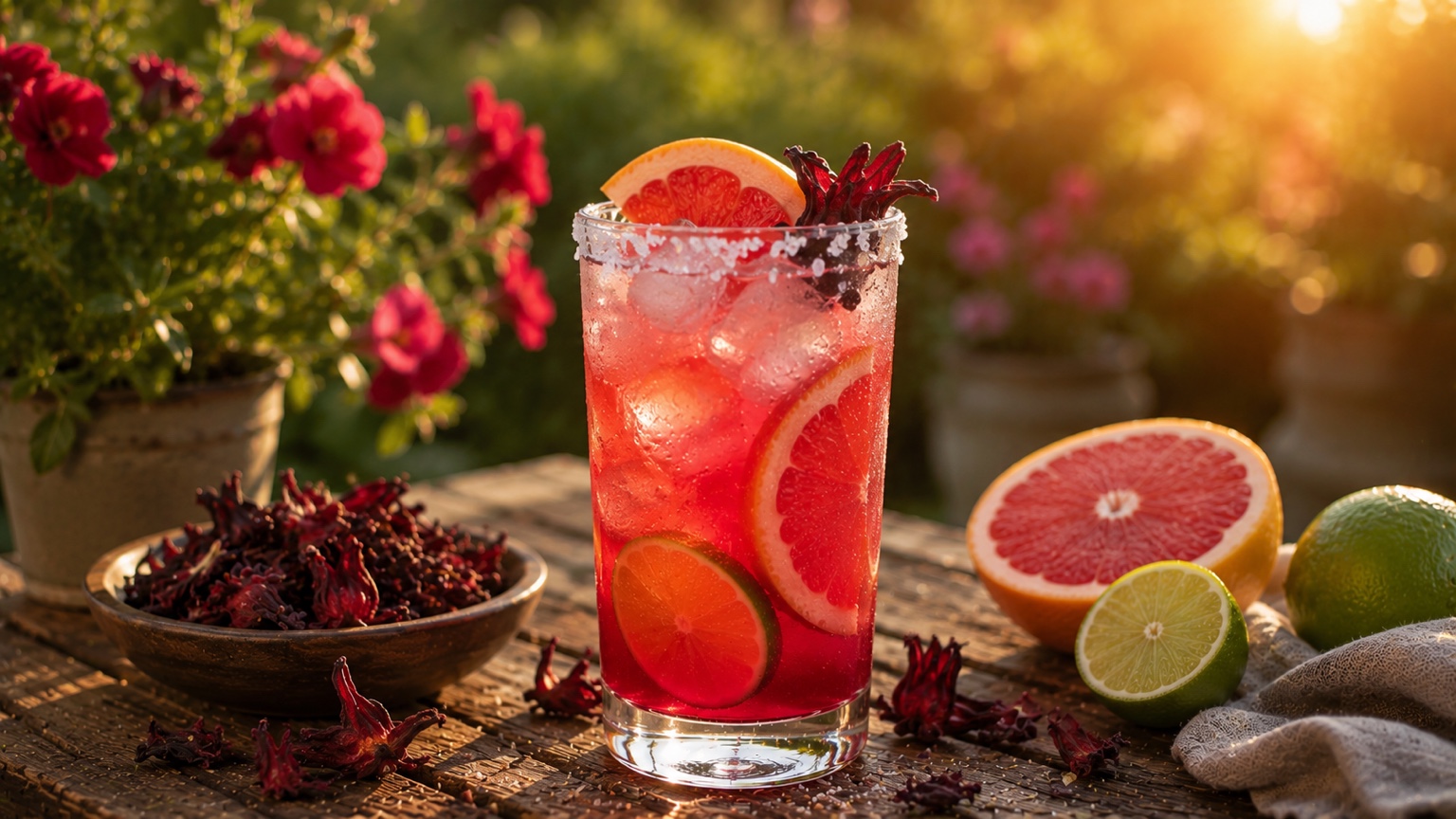
Tequila blanco, fresh grapefruit, hibiscus-infused syrup, and a honey-salt rim. The drink that turns deep ruby in the glass and tastes like a sun-drenched afternoon. Grow your own hibiscus or find dried flowers at any Latin grocery store.
The Recipe
Hibiscus Paloma
This is a shaken-and-built drink — the base gets shaken, then topped with grapefruit soda in the glass. The honey-salt rim is not optional. It's what ties the tartness of the hibiscus and grapefruit together and makes each sip complete.
- 2 oz tequila blanco (or mezcal for a smoky variation)
- 🌺 1 oz hibiscus syrup (recipe below)
- 1 oz fresh grapefruit juice
- ½ oz fresh lime juice
- 2 oz grapefruit soda
- Rim: 1 tbsp honey + ½ tsp flaky salt
- Garnish: grapefruit wedge
- 🌺 1½ oz hibiscus syrup
- 1 oz fresh grapefruit juice
- ½ oz fresh lime juice
- 1 oz strong chilled hibiscus tea
- 3 oz grapefruit soda
- Rim: 1 tbsp honey + ½ tsp flaky salt
- Garnish: grapefruit wedge
The Foundation
Hibiscus Simple Syrup
This syrup is what gives the paloma its deep ruby color and its tart, cranberry-like backbone. It's also useful in countless other applications — lemonade, sparkling water, and gin cocktails all benefit from a splash. Make a double batch and keep it in the fridge.
- 1 cup water
- 1 cup white sugar
- 🌺 ½ cup dried hibiscus flowers (jamaica)
In the Garden
Growing Hibiscus
Hibiscus sabdariffa — the roselle species used for cocktails — is a stunning annual that's grown more easily than most people expect. The dried flowers (jamaica) are the ingredient; the fresh calyces from a home harvest have a more complex, deeper flavor than anything you'll buy commercially.
Bartender Notes
Tips for getting it right
Serve It With
Food & Occasion Pairings
Common Questions
Frequently Asked Questions
Yes — the Hibiscus Paloma mocktail is one of the best non-alcoholic versions on this site, largely because the hibiscus and grapefruit combination is so assertive and complete that it doesn't feel like anything is missing. Replace the tequila with 1 oz of strong hibiscus tea (brewed from dried hibiscus flowers and chilled) and 1 oz of fresh grapefruit juice, and increase the hibiscus syrup slightly. The ruby color, the tartness, and the honey-salt rim all remain exactly the same.
Dried hibiscus flowers (also labeled as 'jamaica' in Latin grocery stores) are widely available in Latin supermarkets, health food stores, and online. They're inexpensive and keep for a long time in an airtight container. Look for flowers that are deep ruby-red — older hibiscus fades to brownish and produces a weaker syrup. Many Mexican restaurants use hibiscus extensively; the dried flowers are the same ingredient used in agua de jamaica.
Yes — Hibiscus sabdariffa (roselle), the species used for tea and cocktails, is a warm-season annual that grows well in USDA zones 8 to 11 and as an annual in colder zones. Plant after the last frost, give it full sun and consistent water, and harvest the calyces (the fleshy red parts that surround the flower base) when they're plump and deeply red. Dry them in a dehydrator or a warm oven at the lowest setting until completely dry. Homegrown hibiscus has a more complex, deeper flavor than the dried commercial product.
Tequila blanco (unaged or silver) is the standard choice — it lets the hibiscus, grapefruit, and lime flavors lead without adding oak or vanilla from barrel aging. A good-quality blanco with clean agave character works best. Espolòn, Olmeca Altos, and El Jimador are all solid options at reasonable prices. Mezcal is a compelling variation — the smokiness adds another layer of complexity that pairs beautifully with hibiscus's tartness.
Yes, though grapefruit soda (Jarritos, Squirt, or a quality grapefruit tonic) deepens the citrus character significantly. If using plain soda water, add another half ounce of fresh grapefruit juice to compensate. A pink grapefruit soda gives the best visual effect and the cleanest flavor. Avoid sweetened grapefruit sodas like Fresca if the drink is already well-sweetened — the balance tips easily.
Pour a thin layer of honey onto a small flat plate. Mix flaky sea salt (not table salt — the texture matters) on another plate. Run a grapefruit wedge around the rim of your glass, then dip it into the honey, rotating to coat the rim evenly. Then dip the honey-coated rim lightly into the salt — just enough for the salt to stick without piling up. The honey acts as the adhesive for the salt and adds a slight sweetness to each sip. The combination of honey, salt, and tart hibiscus grapefruit is what makes this drink memorable.