Cucumber Mint Gin & Tonic
The garden gin and tonic — fresh cucumber ribbons, muddled mint from the bed, dry gin, and a quality tonic poured slowly over the top. No ice bucket required. Just a garden that's doing its job.
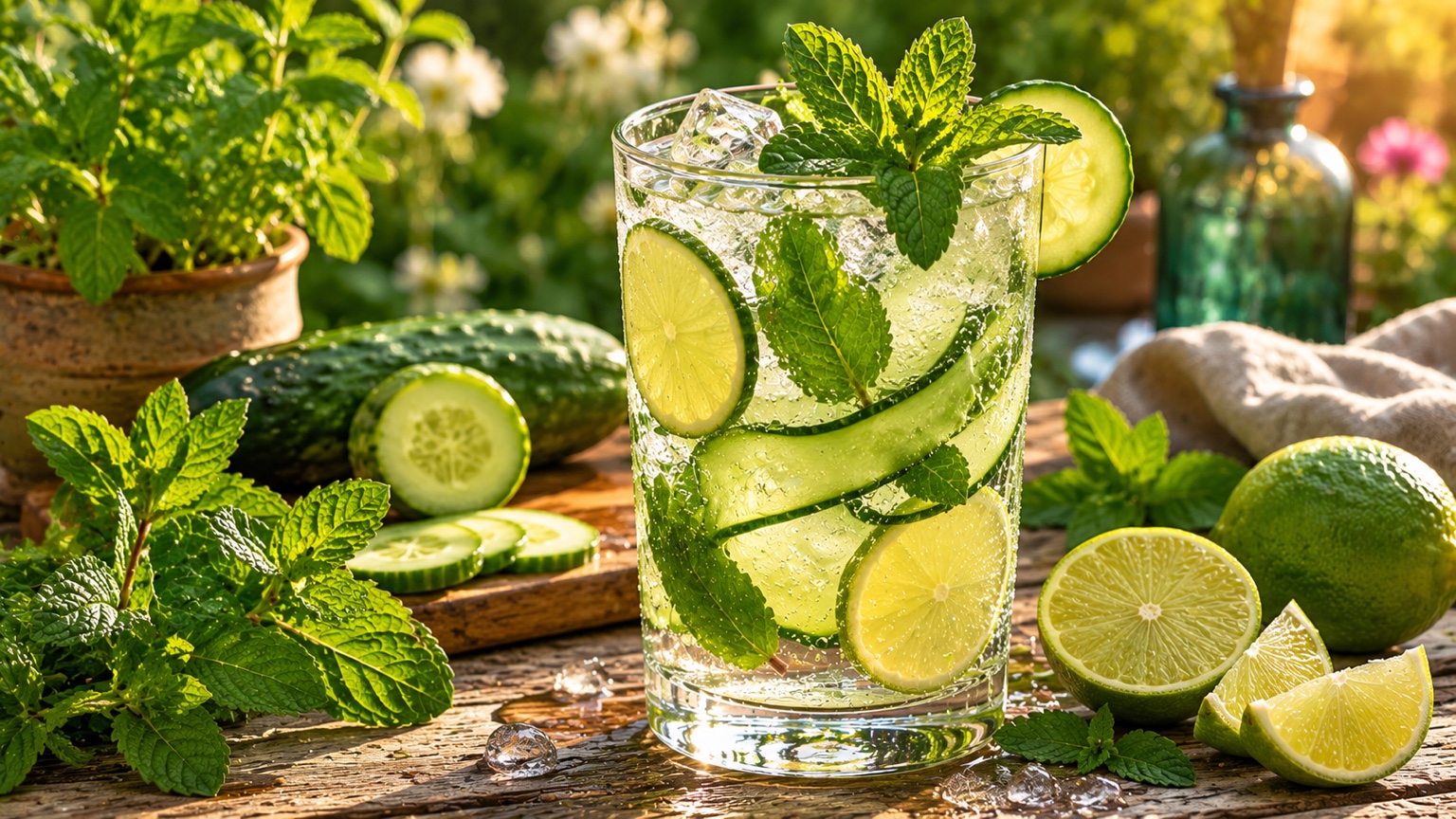
The Recipe
Cucumber Mint Gin & Tonic
This is a built drink — no shaker, no strain. Everything goes into a tall glass in order. The key is cold ice, quality tonic, and not over-muddling the mint. The mocktail version uses a non-alcoholic spirit or a more flavorful tonic with elderflower — both are genuinely worth making.
- 2 oz London Dry gin
- 🥒 3–4 thin cucumber slices
- 🌿 4 fresh mint leaves
- 4 oz quality tonic water
- ½ oz fresh lime juice
- Ice — plenty of it
- Garnish: cucumber ribbon + mint sprig
- 🥒 3–4 thin cucumber slices
- 🌿 4 fresh mint leaves
- ½ oz elderflower cordial
- ½ oz fresh lime juice
- 5 oz quality tonic water
- Ice — plenty of it
- Garnish: cucumber ribbon + mint sprig
In the Garden
Growing Mint & Cucumbers
Mint and cucumbers both peak in midsummer and together they make the most refreshing drink in the bar garden. The one rule with mint: contain it. See the Mint Growing Guide for everything from varieties to harvest and the Cocktail Harvest Hub for the full picture.
Bartender Notes
Tips for getting it right
Serve It With
Food & Occasion Pairings
Common Questions
Frequently Asked Questions
Yes — and the mocktail version is one of the best on this site. Replace the gin with a non-alcoholic spirit (Seedlip Spice or Garden are particularly good) or simply skip it and use a more flavorful tonic combined with a splash of elderflower cordial for body. The cucumber and mint carry the drink beautifully; this is one of the few G&T-style drinks where the alcohol-free version holds its own completely.
A London Dry gin is the most versatile choice — the classic juniper-forward profile lets the cucumber and mint read clearly. Hendrick's is the obvious recommendation (it was essentially built for this drink) but any clean, botanical gin works. Avoid heavily citrus-forward or floral gins unless you want the gin to lead the flavor — here, the garden ingredients should be the headline.
Yes, significantly. Cheap tonic is heavily sweetened and contains artificial quinine flavoring that can make the drink cloying. A quality tonic — Fever-Tree, Q, or Fentimans — has a cleaner bitterness and a more delicate sweetness that lets the gin and botanicals come through. For a cucumber mint G&T where the drink is relatively delicate, good tonic is worth the extra cost.
Use a vegetable peeler to run a long, thin strip down the length of the cucumber. You want a ribbon about 4 to 6 inches long — long enough to drape over the edge of the glass or curl inside it. For a decorative curl, press the ribbon gently around the inside of the glass before adding ice. English or Persian cucumbers work best; they have thinner skin and fewer seeds.
No — the skin carries a significant amount of the cucumber's fresh, green flavor. Leave it on for muddling and for the garnish. The exception is if you're using a waxed grocery-store cucumber, in which case wash it thoroughly or peel it. English and Persian cucumbers (unwaxed, usually sold shrink-wrapped) are ideal for this drink — thinner skin, better flavor, no bitterness.
You can batch the gin-cucumber-lime component — steep cucumber slices in gin for a few hours in the fridge for a gentle cold infusion, then add lime juice and keep refrigerated for up to 24 hours. Add the tonic and fresh mint per glass when serving. Never add tonic to a batch — it will go flat immediately. Fresh mint should always go in at service time.